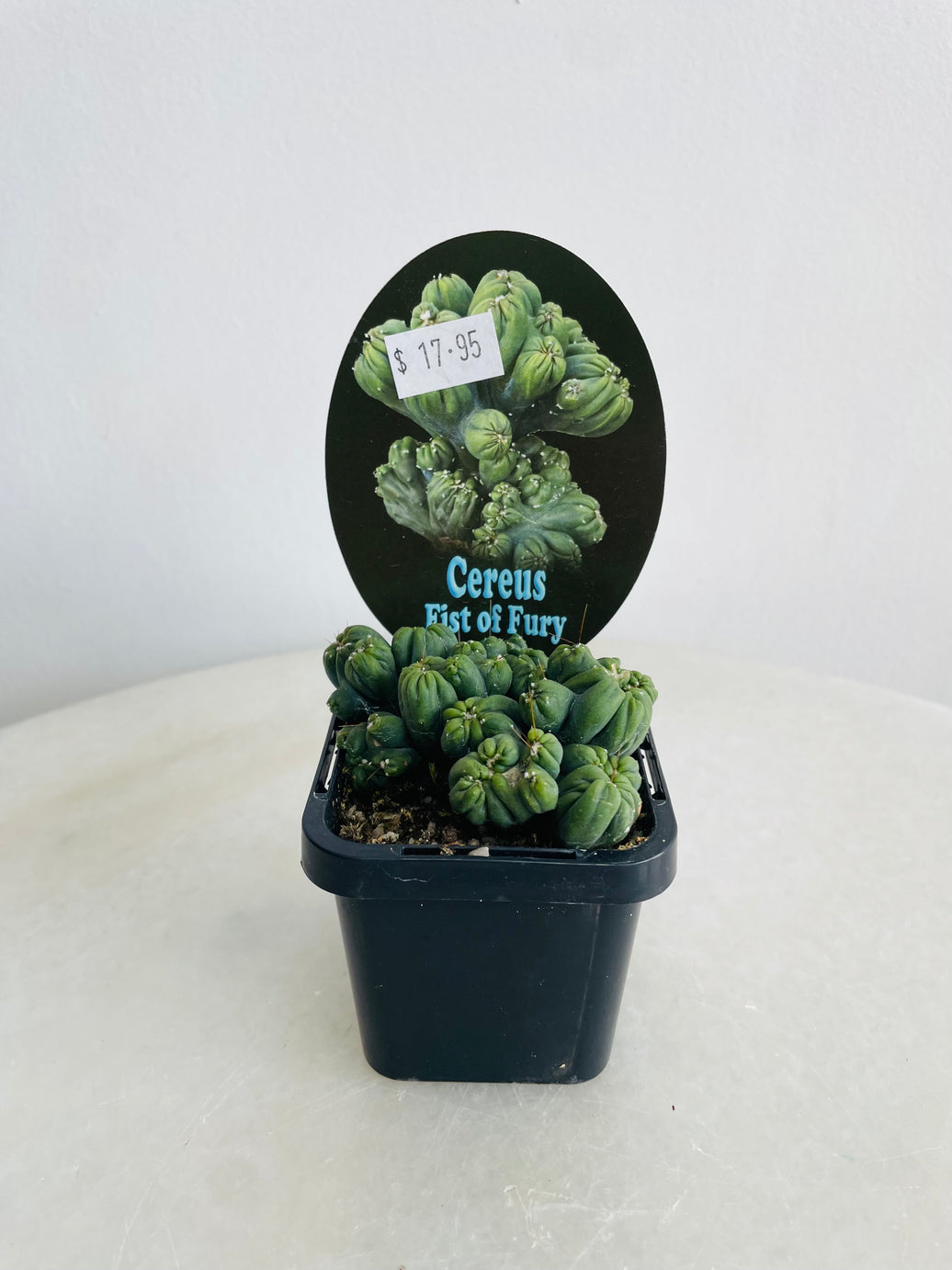

The Details
• Botanical Name: Cereus sp. (monstrose form)
• Common Name: Fist of Fury Cactus
• Pot Size: 70mm Nursery Pot
• Plant Type: Monstrose cactus / Succulent
Light
The Fist of Fury Cactus enjoys plenty of bright natural light and will perform best in a position receiving several hours of sunshine each day.
Indoors, place it near a sunny north-facing window or another bright position where it receives good light throughout the day. Outdoors, choose a sunny, sheltered location with excellent airflow.
Although it appreciates sunshine, plants grown in greenhouse conditions should be introduced to stronger direct sunlight gradually. Intense afternoon sun during Melbourne's hottest summer days can cause scorching, particularly on younger or recently relocated plants.
Insufficient light can lead to weaker, stretched growth and may reduce the compact, chunky appearance that makes this cactus so appealing.
Watering
The Fist of Fury Cactus prefers a thorough watering followed by a complete drying-out period.
During spring and summer, water deeply once the potting mix has dried out completely. Allow excess water to drain freely and avoid leaving the pot standing in water.
Its thick, fleshy growth stores moisture, allowing it to tolerate extended dry periods much better than consistently damp conditions.
As temperatures cool in autumn, gradually reduce watering. During winter, keep the plant predominantly dry, particularly if it is growing in a cool environment.
Overwatering is one of the biggest risks for this cactus, as excess moisture can lead to root and stem rot. Always check the potting mix before watering rather than following a fixed schedule.
Feeding
Feed your Fist of Fury Cactus throughout the year according to its growth rate and seasonal conditions.
During spring and summer, apply a diluted cactus and succulent fertiliser approximately every four to six weeks to support healthy growth and the development of new offsets.
As growth slows during autumn and winter, reduce feeding significantly. If the plant enters a cool winter rest, fertilising is generally unnecessary until active growth resumes.
Avoid excessive nitrogen, which can encourage soft, weak growth. A balanced fertiliser or one specifically formulated for cacti and succulents is ideal.
Growing
The Fist of Fury Cactus is a monstrose form of Cereus, meaning its growing points develop in an unusual, irregular pattern rather than producing the typical upright columns associated with many members of the genus.
Instead of forming a single symmetrical stem, it produces clusters of rounded, deeply grooved sections that can resemble miniature fists, knuckles or tightly folded green sculptures.
As the plant matures, new growth may emerge from different areas, gradually creating a larger, more complex cluster. Its appearance can vary considerably between specimens, making each plant genuinely unique.
Growth is generally relatively slow, particularly when grown in a small container, although established plants may become more vigorous under warm, bright conditions.
For best results, use a coarse, free-draining growing medium that allows excess moisture to move quickly away from the roots.
Our Cacti & Succulent Mix is a suitable choice, providing the drainage and aeration needed to support healthy root development.
Choose a pot with drainage holes and avoid moving the plant into an unnecessarily large container. A slightly snug pot helps the growing medium dry more consistently between waterings.
This cactus prefers warm conditions and should be protected from frost, prolonged cold weather and excessive winter moisture.
Pet Friendly?
The Fist of Fury Cactus is not recommended as pet-friendly.
Although Cereus cacti are not generally regarded as highly toxic, this plant may develop small but sharp spines that can cause injuries to curious pets.
Its unusual shape may also encourage investigation from cats and dogs, so it's best displayed somewhere they cannot easily reach or knock it over.
Good to Know
The unusual appearance of the Fist of Fury Cactus comes from its monstrose growth habit, which causes the plant to develop irregular shapes, folds and clusters rather than the symmetrical growth typically associated with cacti.
Unlike many heavily spined desert cacti, this variety often has relatively few visible spines. However, some sections may still produce sharp spines, so handle it carefully.
As the plant grows, its shape will continue to change, with new knobbly sections appearing in different positions. No two specimens will develop in exactly the same way.
Because this plant is sold under the horticultural name Fist of Fury, its precise Cereus species or cultivar identity may vary between suppliers.
Give it plenty of bright light, excellent drainage and a dry winter rest to keep its unusual growth healthy and compact.
• We photograph as many of our plants as possible; however, some listings may occasionally use supplier images.
• As plants are living things, every plant is unique and natural variations in size, colour and fullness should be expected.
• The plant you receive may not be the exact one pictured, but we'll always hand-pick a beautiful, healthy plant we'd happily display in our own home.