The Details
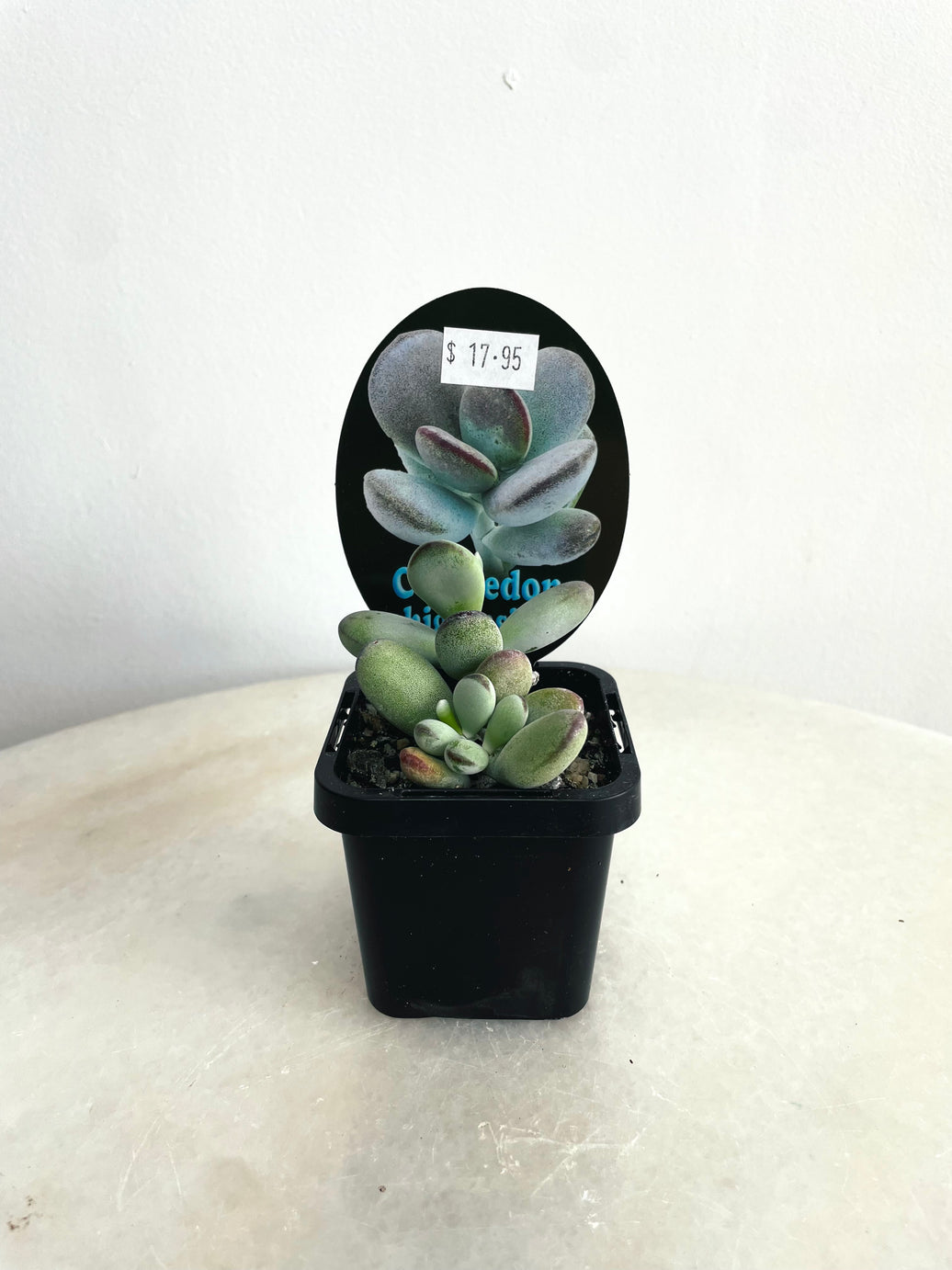
• Botanical Name: Cotyledon orbiculata ‘Higginsiae’
• Common Name: Pig’s Ear ‘Higginsiae’
• Pot Size: 70mm Nursery Pot
• Plant Type: Succulent / Evergreen perennial
Light
Pig’s Ear ‘Higginsiae’ loves bright natural light and will develop its best colouring and compact growth when given plenty of sunshine.
Indoors, position it near a sunny north-facing window or another bright location receiving several hours of direct sunlight each day. Outdoors, a sunny position with good airflow is ideal.
The attractive reddish-purple markings on its leaves are often more pronounced when the plant receives strong, consistent light. In lower light, the foliage may become greener and growth can become stretched or less compact.
Although it enjoys sunshine, plants previously grown in greenhouse conditions should be introduced to intense direct sunlight gradually. Some protection from scorching afternoon sun during Melbourne's hottest summer days can help prevent leaf damage.
Watering
Like most succulents, Pig’s Ear ‘Higginsiae’ prefers a thorough watering followed by a good drying-out period.
During spring and summer, water deeply once the potting mix has dried out completely. Allow excess water to drain freely and avoid leaving the pot standing in water.
Its thick, fleshy leaves store moisture, allowing the plant to tolerate periods of dryness much better than consistently damp conditions.
As temperatures cool in autumn and winter, reduce watering according to the plant's growth and environmental conditions. Always check the potting mix before watering, as cool, wet soil can quickly lead to root rot.
Avoid allowing water to sit around the base of the leaves for extended periods, particularly in cooler weather. Good airflow and a free-draining growing medium are essential for keeping this succulent healthy.
Feeding
Feed your Pig’s Ear ‘Higginsiae’ throughout the year according to its growth rate and seasonal conditions.
During periods of active growth, apply a diluted cactus and succulent fertiliser approximately every four to six weeks to encourage healthy foliage and steady development.
As growth slows during cooler or particularly hot periods, reduce feeding accordingly. If the plant enters a period of dormancy, fertilising is generally unnecessary until active growth resumes.
Avoid excessive nitrogen, which can encourage soft, weak growth. A balanced fertiliser or one specifically formulated for cacti and succulents is ideal.
Growing
Cotyledon orbiculata ‘Higginsiae’ is a slow to moderately growing succulent that develops thick, rounded leaves along fleshy stems.
Its foliage is typically silvery green with a powdery, wax-like coating known as farina. This natural protective layer helps reduce moisture loss and contributes to the plant's distinctive frosted appearance.
The leaves may develop beautiful reddish-purple markings along their tips and upper surfaces, particularly when grown in bright light. Colour intensity can vary depending on sunlight, temperature and growing conditions.
As the plant matures, it can develop a more branched, shrubby appearance, with clusters of fleshy leaves forming along upright or spreading stems.
Established plants may eventually produce attractive bell-shaped flowers in shades of orange, red or yellow on tall flowering stems, although flowering is generally more common on mature specimens.
For best results, grow your Pig’s Ear ‘Higginsiae’ in a coarse, free-draining potting medium.
Our Cacti & Succulent Mix is a suitable choice, providing the aeration and drainage needed to support healthy root development while reducing the risk of excess moisture.
Choose a pot with drainage holes and avoid moving the plant into an unnecessarily large container. A slightly snug pot helps the growing medium dry more consistently between waterings.
This succulent prefers warm, bright conditions and should be protected from frost, prolonged cold weather and excessive winter moisture.
Pet Friendly?
Pig’s Ear ‘Higginsiae’ is not pet-friendly.
Cotyledon orbiculata is considered toxic to cats and dogs if ingested. It contains compounds that can affect the heart and nervous system, potentially causing serious symptoms.
Keep this plant well out of reach of curious pets and children. If you suspect your pet has eaten any part of the plant, contact your veterinarian promptly.
Good to Know
The name Pig’s Ear comes from the plant's distinctive thick, rounded leaves, which resemble little ears. The ‘Higginsiae’ form is particularly admired for its compact, plump foliage and attractive reddish-purple markings.
The powdery coating on the leaves is completely natural and helps protect the plant from intense sunlight and moisture loss. Avoid rubbing or wiping the foliage unnecessarily, as this protective layer can be permanently disturbed on individual leaves.
Leaf colouring can change throughout the year depending on sunlight, temperature and growing conditions. Plants receiving plenty of bright light may develop stronger burgundy markings, while those in gentler light may appear predominantly silvery green.
As the plant grows, its shape will gradually change, with new leaves and branches creating a fuller, more sculptural appearance.
For the best results, provide plenty of sunshine, excellent drainage and allow the potting mix to dry thoroughly between waterings.
• We photograph as many of our plants as possible; however, some listings may occasionally use supplier images.
• As plants are living things, every plant is unique and natural variations in size, colour and fullness should be expected.
• The plant you receive may not be the exact one pictured, but we'll always hand-pick a beautiful, healthy plant we'd happily display in our own home.