




Japanese Holly Fern | Cyrtomium falcatum | 140mm Nursery Pot
About Japanese Holly Fern | Cyrtomium falcatum | 140mm Nursery Pot
Product Description
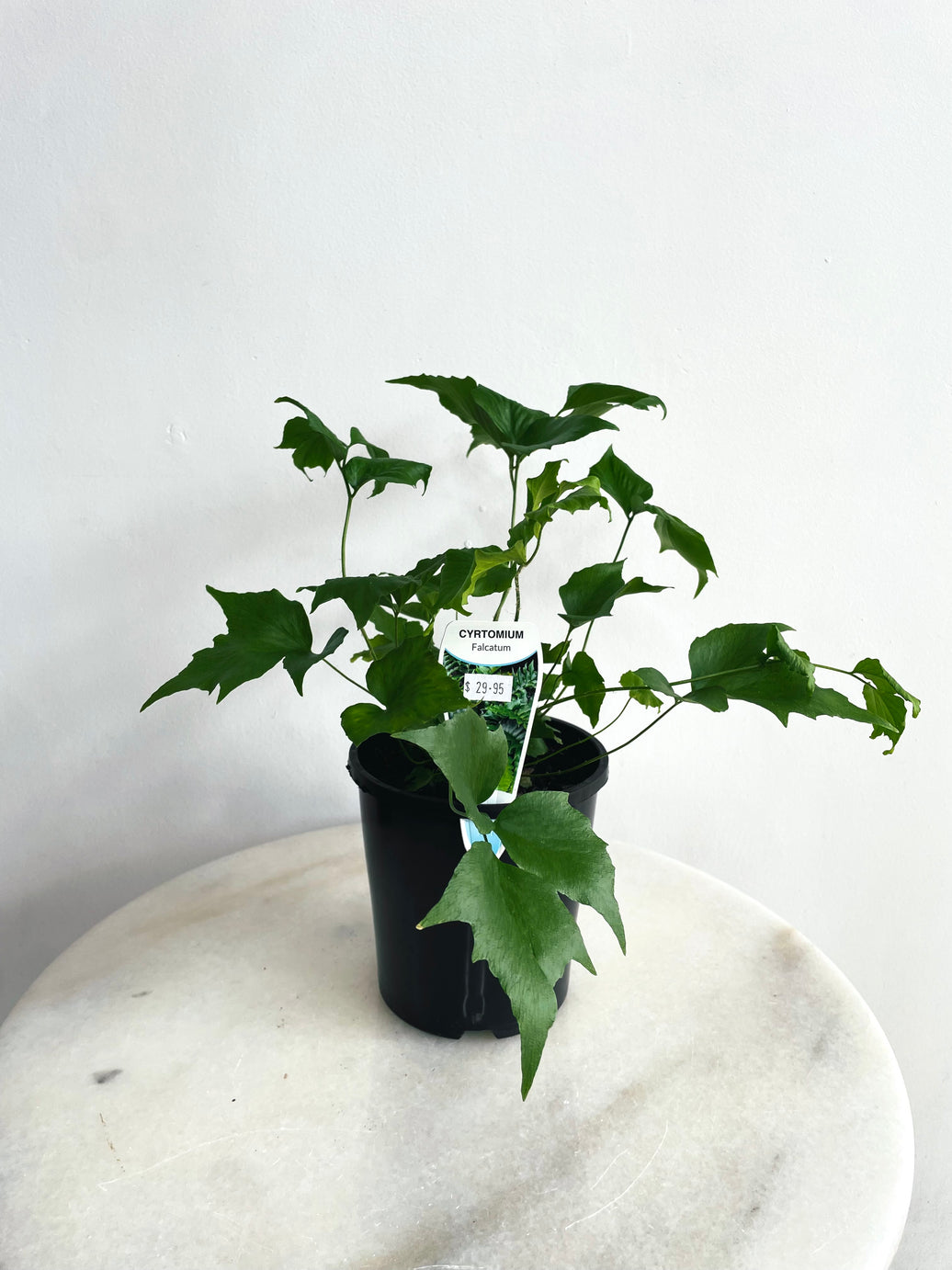
A fern with a little something different! Meet the Japanese Holly Fern, a gorgeous green character that brings all the lushness of a traditional fern with a bold, almost tropical twist. With its glossy, deep-green foliage and distinctive holly-like leaflets, this beauty is perfect for anyone who loves ferns but wants something a little more unusual.
Unlike the soft, feathery foliage of many familiar ferns, the Japanese Holly Fern produces beautifully textured, leathery leaflets with irregular, slightly pointed edges. Its arching fronds create a relaxed, spreading shape, while the rich green colouring adds a lovely sense of depth to any plant collection.
Native to parts of eastern Asia, this adaptable fern is known for being a little tougher than many of its delicate relatives. It appreciates moisture and humidity but can tolerate slightly drier conditions once established, making it a fantastic choice for fern lovers looking for something a little more forgiving.
Whether you're styling a bright bathroom, adding greenery to a shaded corner or building your very own indoor jungle, the Japanese Holly Fern brings plenty of texture, character and natural charm.
Why You'll Love It
• Glossy, deep-green foliage with distinctive holly-shaped leaflets.
• A unique alternative to traditional soft, feathery ferns.
• Beautiful arching growth creates a lush, spreading appearance.
• More tolerant of occasional dryness than many other fern varieties.
• A wonderful choice for shaded spaces and leafy indoor displays.
Plant Care Details
Returns Policy
For our full Returns & Refunds Policy, click here.
Japanese Holly Fern | Cyrtomium falcatum | 140mm Nursery Pot
Japanese Holly Fern | Cyrtomium falcatum | 140mm Nursery Pot

Same-day click and collect.

Signature gift wrapping.

Quick shipping across Australia.

Order before 12pm, Monday to Friday for same-day fulfilment.
While you’re here, explore more!
Picked a favourite already? Dangerous move. There’s a whole lot more to fall for across plants, pots, gifting and homewares.

Plants
Easy-care plants, rare finds, pet-friendly options and everything in between.

Pots
Eye-catching pots, hanging planters, stands and pieces that elevate your greenery.

Plant Health
Tools, accessories and trusted brands to keep your plants thriving.

Homewares
Unique candles, textiles and design-led pieces for your space.

Bath & Body
Soaps, scrubs, oils and self-care essentials. You've earned it.

Gifting
Unforgettable gifts and vouchers to wow your loved ones.

Thanks for shopping small.
You could be shopping at the big green shed. But you're not. Good call! Thanks for backing local and supporting a store with more personality, better chats and a whole lot more care.
The kindest words.


