The Details
• Botanical Name: Dracaena marginata (also known as Dracaena reflexa var. angustifolia)
• Common Name: Madagascar Dragon Tree, Dragon Tree
• Pot Size: 250mm Nursery Pot
• Plant Type: Tropical Evergreen / Indoor Tree
Light
Madagascar Dragon Trees are wonderfully adaptable when it comes to lighting, making them a popular choice for a variety of indoor environments.
They grow best in bright, indirect light, where their foliage can develop strong colour, healthy growth and a beautiful, full appearance.
A position near an east-facing window or a little back from a bright north-facing window is ideal. Plenty of filtered natural light will help maintain the plant's upright structure and encourage new leaves to emerge from the growing tips.
One of the great things about Dracaena marginata is its ability to tolerate medium and lower-light conditions. While growth will generally slow in dimmer positions, established plants can adapt well provided they still receive some natural light.
Avoid placing your Dragon Tree in prolonged, harsh direct sunlight, particularly during Melbourne's warmer months. Strong afternoon sun can scorch the narrow leaves, leaving pale or brown patches.
A little gentle morning sunlight is usually well tolerated, especially when the plant has been gradually acclimatised.
For the healthiest growth and most attractive foliage, aim for a position with plenty of bright, indirect light.
Watering
Madagascar Dragon Trees prefer a little breathing room between waterings, making them a fantastic option for anyone who occasionally forgets to reach for the watering can.
Allow approximately the top third to half of the potting mix to dry before watering thoroughly. Ensure excess water drains freely from the bottom of the nursery pot.
Although these plants are reasonably drought tolerant once established, they still appreciate a good, thorough drink when the soil has dried sufficiently.
During spring and summer, when temperatures are warmer and the plant is actively growing, watering will generally be required more frequently.
In autumn and winter, reduce watering as growth slows and the potting mix takes longer to dry.
The biggest thing to avoid is consistently wet soil. Dragon Trees are particularly sensitive to waterlogged conditions, which can lead to root rot, yellowing foliage and softening stems.
Always check the moisture level before watering rather than following a strict weekly schedule.
Brown leaf tips can occasionally develop due to inconsistent watering, dry air or sensitivity to minerals and fluoride in tap water. If tip browning becomes persistent, consider using filtered or rainwater and reviewing your watering routine.
Remember, it's generally better to let your Dragon Tree dry a little too much than to keep its roots constantly wet.
Feeding
Although Madagascar Dragon Trees aren't particularly heavy feeders, regular, gentle fertilising can help support healthy foliage and steady growth.
During spring and summer, apply a balanced liquid fertiliser suitable for indoor plants approximately every 4–6 weeks, following the manufacturer's recommended dilution.
This helps replenish nutrients in the potting mix and supports the development of strong new leaves.
During autumn and winter, reduce the strength and frequency of feeding to match the plant's slower growth.
If your Dragon Tree continues actively growing in a warm, bright indoor environment throughout the cooler months, occasional light feeding can still be beneficial.
Avoid overfertilising, as these plants can be sensitive to excess salts accumulating in the soil. Too much fertiliser may contribute to brown leaf tips and damaged roots.
A little, applied consistently, is all that's needed.
Growing
Native to Madagascar, Dracaena marginata is a slow to moderately growing evergreen tree belonging to the Asparagaceae family.
Despite its common name, it isn't a true palm. Instead, it develops slender, cane-like trunks topped with clusters of long, narrow leaves.
As the plant matures, older leaves naturally yellow and fall away, gradually exposing more of the woody trunk. This is what creates the distinctive, ringed stems and elegant tree-like silhouette that make Dragon Trees so appealing.
In suitable indoor conditions, established plants can eventually reach approximately 2–3 metres tall, although their growth is relatively slow and their height can be managed through pruning.
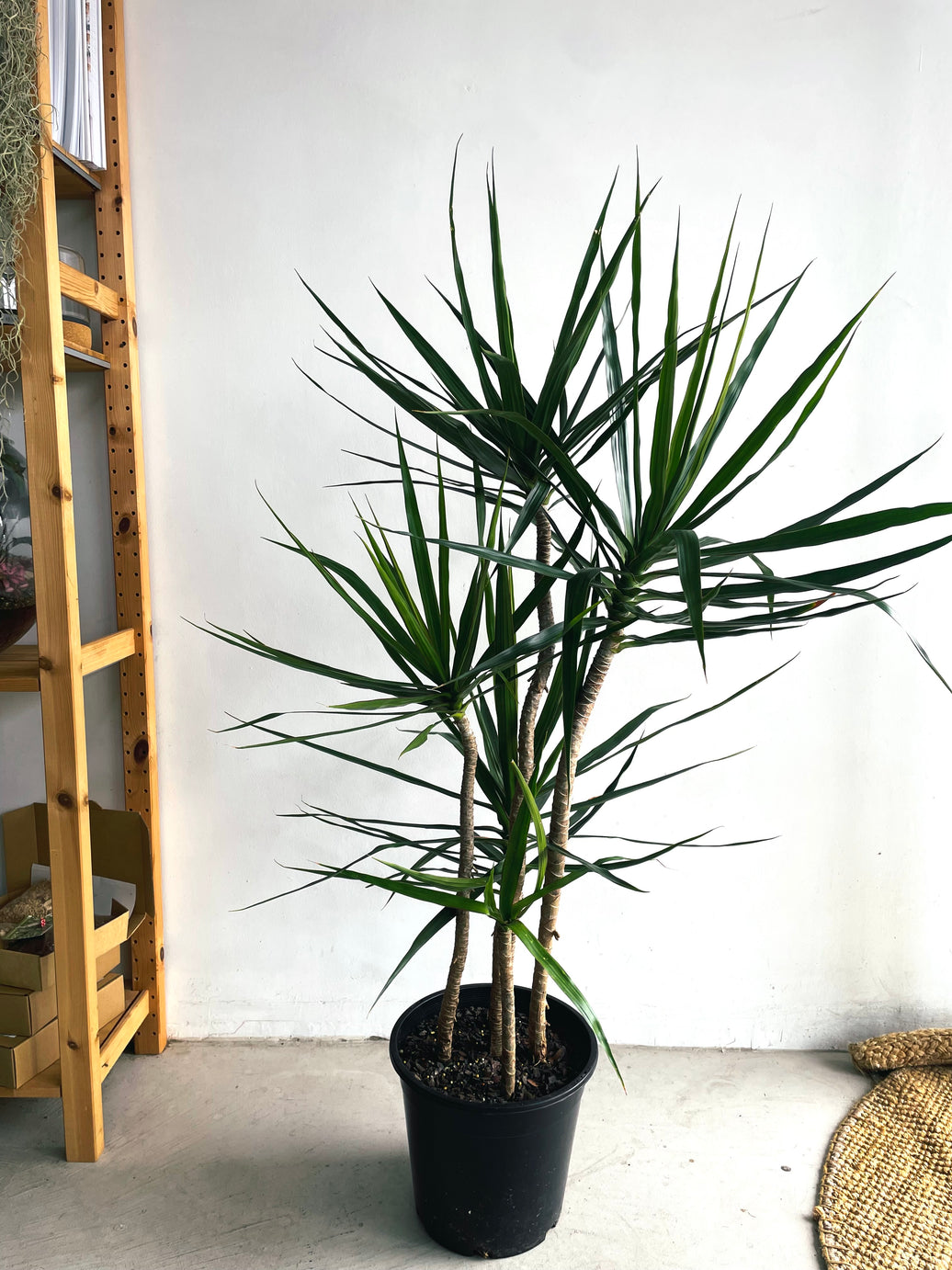
The multiple trunks of this particular specimen create a beautifully layered appearance, with foliage emerging at different heights to give the plant extra fullness and visual interest.
Unlike broad-leaved tropical plants, Dragon Trees maintain a relatively narrow footprint, making them particularly useful for adding height to smaller rooms or spaces where floor area is limited.
For best results, plant into a well-draining potting mix that allows air to circulate around the roots while retaining a modest amount of moisture.
Our Minty Greenhouse Core Indoor Mix is a suitable choice, providing a balanced growing environment for healthy root development.
Madagascar Dragon Trees prefer warm, stable indoor temperatures and should be protected from frost, cold draughts and sudden temperature changes.
They generally tolerate average household humidity well, although extremely dry conditions may contribute to crispy leaf tips.
Occasionally wipe the leaves with a soft, damp cloth to remove accumulated dust and keep the foliage looking fresh.
If the plant becomes too tall over time, the stems can be pruned during the warmer growing season. Healthy plants will often produce new shoots below the pruning point, allowing you to encourage a bushier shape.
Repot when the plant becomes noticeably root-bound, ideally during spring or summer. Choose a pot only slightly larger than the existing root ball to avoid excessive moisture retention.
With the right conditions, your Madagascar Dragon Tree can remain a beautiful feature in your home for many years.
Pet Friendly?
No. Madagascar Dragon Trees are toxic to cats and dogs if ingested.
Dracaena marginata contains naturally occurring saponins that can cause gastrointestinal upset in pets.
Possible symptoms include vomiting, excessive drooling, reduced appetite and lethargy. Cats may also develop dilated pupils.
We recommend keeping this plant away from curious cats and dogs, particularly those that enjoy chewing foliage.
If you suspect your pet has ingested part of the plant, contact your veterinarian for advice.
Good to Know
Madagascar Dragon Trees are particularly popular for their ability to create height and structure without overwhelming a space.
Their distinctive ringed trunks are a natural part of the plant's growth. As older leaves fall away, they leave behind markings on the stems that gradually become more prominent with age.
It's also completely normal for the occasional older leaf to yellow and drop from the lower part of a foliage crown. This is how the plant develops its characteristic bare trunks and leafy tops.
The narrow leaves may occasionally develop dry or brown tips, particularly in environments with very dry air, inconsistent watering or mineral-heavy water. These can be carefully trimmed with clean scissors if desired, following the natural shape of the leaf.
Dragon Trees are relatively slow growers, so patience is part of the process. Their long lifespan and ability to develop increasingly interesting shapes make them especially rewarding plants to grow over time.
The plant pictured is a beautifully established, multi-stemmed specimen with several slender, textured trunks and clusters of deep green foliage at varying heights. Its generous 250mm nursery pot makes it an excellent ready-to-style floor plant for living rooms, offices and larger indoor spaces.
• We photograph as many of our plants as possible; however, some listings may occasionally use supplier images.
• As plants are living things, every plant is unique and natural variations in size, colour and fullness should be expected.
• The plant you receive may not be the exact one pictured, but we'll always hand-pick a beautiful, healthy plant we'd happily display in our own home.