
The Details
• Botanical Name: Echinopsis subdenudata var. compacta
• Common Name: Domino Cactus
• Pot Size: 70mm Nursery Pot
• Plant Type: Globular cactus
Light
The Domino Cactus thrives in bright light and appreciates several hours of gentle direct sunlight each day.
A sunny north-facing or bright east-facing window is ideal indoors, providing the light needed to maintain its compact, rounded shape and encourage healthy growth.
Outdoors, position it somewhere bright with morning sunshine and some protection from intense afternoon heat, particularly during Melbourne's warmer summer days.
Although this cactus enjoys sunshine, plants grown in sheltered or greenhouse conditions should be introduced to stronger direct light gradually. Sudden exposure to intense sunlight can cause scorching or discolouration.
Insufficient light may cause the cactus to stretch or become elongated, losing its naturally compact appearance.
Watering
Like most desert cacti, the Domino Cactus prefers a thorough watering followed by a complete drying period.
During spring and summer, water deeply once the potting mix has dried out completely. Allow excess water to drain freely and avoid watering again while moisture remains around the roots.
Although drought-tolerant, this cactus still benefits from regular watering during active growth, provided the growing medium dries properly between applications.
As temperatures cool in autumn, gradually reduce watering.
During winter, keep the plant predominantly dry, especially if temperatures are low and growth has slowed. In warmer indoor conditions, occasional watering may be necessary if the plant begins to show signs of dehydration.
Avoid leaving the pot sitting in water or allowing the growing medium to remain damp for extended periods. Excess moisture, particularly during cooler weather, can lead to root rot.
Feeding
Feed your Domino Cactus throughout the year according to its growth rate and seasonal conditions.
During spring and summer, apply a diluted cactus and succulent fertiliser approximately every four to six weeks to support healthy growth and encourage flower development.
As temperatures cool and growth slows, reduce feeding frequency.
During a cool winter rest, fertilising is generally unnecessary. Resume feeding when warmer conditions encourage active growth.
Use a balanced or low-nitrogen fertiliser formulated for cacti and succulents, and avoid excessive feeding, which can encourage weak or overly soft growth.
Growing
Echinopsis subdenudata is a compact cactus native to South America, particularly Bolivia, where it grows in rocky environments with excellent drainage.
The 'compacta' form is valued for its neat, rounded growth habit, prominent ribs and distinctive white, woolly areoles.
Unlike many heavily armed cacti, the Domino Cactus has extremely short or almost absent spines, giving it a relatively smooth appearance. However, small spines may still be present, so handle it carefully.
As the plant matures, it may gradually develop a slightly taller, rounded-to-columnar shape. Some specimens also produce offsets around the base, creating attractive clusters of smaller plants.
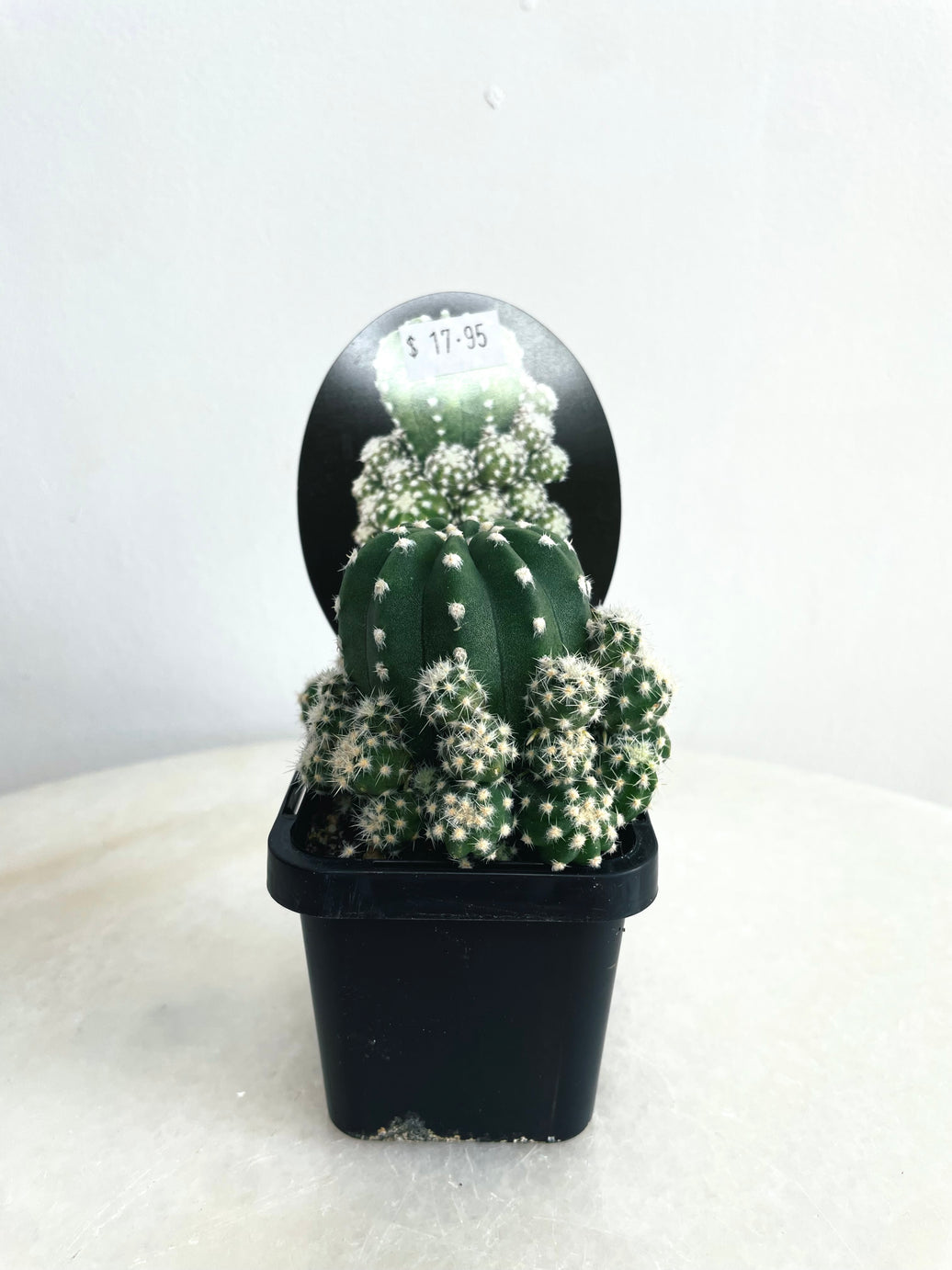
The specimen pictured already displays this charming clustering habit, with numerous young offsets surrounding the central cactus.
For best results, grow your Domino Cactus in a free-draining cactus and succulent potting mix that provides excellent aeration around the roots.
Our Cacti & Succulent Mix is a suitable choice, offering the drainage and structure needed to support healthy root development while reducing the risk of excess moisture.
Choose a container with drainage holes and avoid unnecessarily large pots, which can retain moisture for too long.
The Domino Cactus enjoys warm temperatures during active growth and benefits from cooler, drier conditions during winter.
In Melbourne, it can be grown outdoors in a sheltered position during warmer months, but should be protected from prolonged winter rain, excessive dampness and frost.
One of this cactus's most spectacular features is its flowering potential. Mature plants can produce large, fragrant, white flowers on elongated floral tubes, often opening during the evening or overnight.
These flowers are typically short-lived, sometimes lasting only a single night or into the following day, making them an exciting treat for patient growers.
Pet Friendly?
The Domino Cactus is not generally considered chemically toxic to cats or dogs.
However, it is not entirely pet-friendly, as even its very short spines can cause irritation or minor injuries if handled or chewed.
Its firm body and growing medium may also present a risk if curious pets attempt to bite or ingest parts of the plant.
Keep it out of reach of pets and young children, particularly those inclined to investigate plants with their mouths or paws.
Good to Know
The Domino Cactus gets its common name from the distinctive white, woolly areoles that resemble little dots scattered across its dark green body.
Despite its almost spineless appearance, it is a true cactus and should be cared for using typical cactus growing principles, including bright light, excellent drainage and careful watering.
The 'compacta' form is particularly appealing for its neat growth habit and suitability for smaller containers.
Some plants remain as single rounded specimens, while others develop offsets and form attractive clusters over time. The plant pictured has already produced numerous offsets around its base.
One of its most impressive features is its ability to produce enormous, fragrant white flowers, often much larger than the plant itself. Flowering generally requires maturity, strong light and appropriate seasonal growing conditions.
A cooler, relatively dry winter rest can help encourage flowering once the plant is mature.
Although its spines are minimal, always handle the plant gently and avoid damaging the delicate white areoles, which are a defining part of its appearance.
• We photograph as many of our plants as possible; however, some listings may occasionally use supplier images.
• As plants are living things, every plant is unique and natural variations in size, colour and fullness should be expected.
• The plant you receive may not be the exact one pictured, but we'll always hand-pick a beautiful, healthy plant we'd happily display in our own home.