The Details
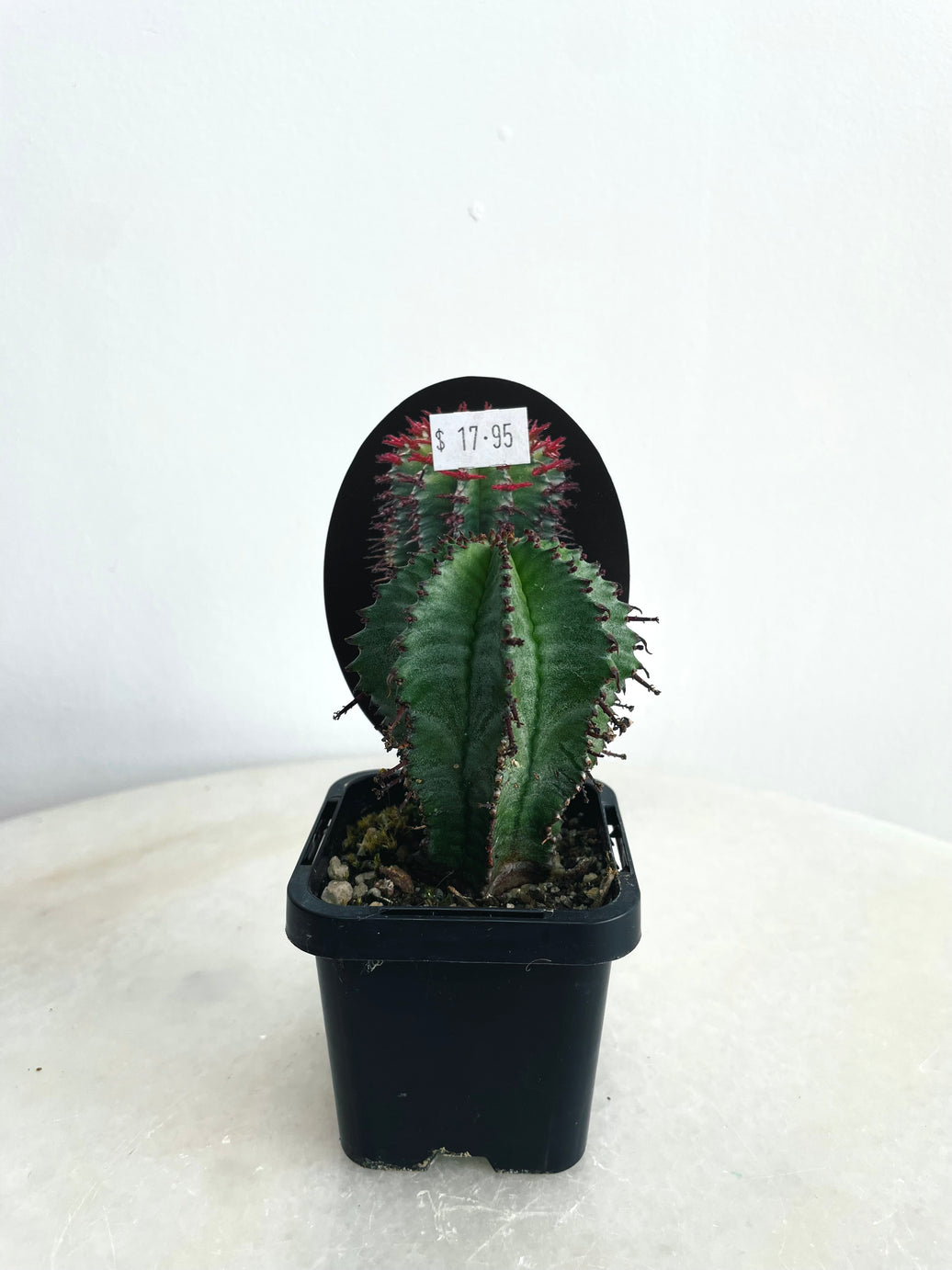
• Botanical Name: Euphorbia horrida
• Common Name: African Milk Barrel
• Pot Size: 70mm Nursery Pot
• Plant Type: Drought-tolerant succulent
Light
The African Milk Barrel loves bright conditions and performs best with several hours of direct sunlight each day.
Indoors, position it near a sunny north-facing window where it can receive plenty of natural light. A bright east-facing position may also work, provided the plant receives sufficient direct morning sunshine.
Outdoors, choose a sunny, well-ventilated location protected from prolonged rainfall. Plants grown indoors or under greenhouse conditions should be gradually introduced to stronger sunlight to prevent scorching.
Adequate light is essential for maintaining its compact, sturdy growth and distinctive ribbed appearance. In insufficient light, stems may become elongated, weak or misshapen.
Watering
The African Milk Barrel is adapted to dry environments and prefers its potting mix to dry out completely between waterings.
During spring and summer, water thoroughly when the mix is completely dry, allowing any excess water to drain freely from the pot.
As temperatures cool in autumn, gradually reduce watering to reflect slower growth and reduced moisture requirements.
During winter, keep the plant predominantly dry, especially when temperatures are low. If maintained in a consistently warm indoor environment, occasional light watering may be necessary to prevent excessive dehydration.
Avoid leaving the plant sitting in water or allowing moisture to remain trapped around its roots. Overwatering, particularly during cooler weather, is one of the most common causes of problems with this species.
When watering, direct water onto the potting mix rather than allowing it to collect around the stem.
Feeding
Feed your African Milk Barrel throughout the year according to its growing conditions and seasonal activity.
During spring and summer, apply a diluted cactus and succulent fertiliser approximately every four to six weeks to support healthy, steady growth.
As temperatures cool and growth slows, reduce feeding frequency.
During a cool winter rest, fertilising is generally unnecessary. Resume regular feeding when warmer conditions encourage active growth.
Avoid excessive fertilising, particularly with high-nitrogen products, as this can encourage weak growth and compromise the plant's naturally compact structure.
Growing
Euphorbia horrida is a distinctive succulent native to South Africa, where it grows in dry, rocky environments with excellent drainage and plenty of sunlight.
Its thick, upright stems feature prominent vertical ribs lined with rows of dark spines. These spines are the hardened remains of flower stalks, giving the plant its wonderfully rugged appearance.
Although young plants often begin as a single upright stem, mature specimens can gradually produce offsets around their base, eventually developing into impressive clusters of sculptural stems.
Growth is generally slow to moderate, particularly when grown in containers, making it an excellent choice for smaller spaces and collectors who enjoy unusual architectural plants.
For best results, plant in a very free-draining, mineral-rich growing medium that provides excellent aeration around the roots.
Our Cacti & Succulent Mix is a great choice, offering the drainage and structure needed to keep this species healthy.
Choose a pot with drainage holes and avoid moving it into a significantly larger container before necessary, as excess potting mix can retain moisture for too long.
The African Milk Barrel enjoys warm, sunny conditions but should be protected from prolonged cold, frost and excessive winter rainfall.
In Melbourne, a sunny, sheltered position or bright indoor location is ideal during winter. Keep the growing medium dry during cooler periods and avoid exposing young plants to freezing temperatures.
When repotting or handling, wear gloves and take care around the spines and stems.
Pet Friendly?
No, the African Milk Barrel is not pet-friendly.
Like other Euphorbia species, Euphorbia horrida contains a milky white latex sap that can be toxic and irritating if ingested or exposed to the skin, eyes or mouth.
The sap may cause irritation, inflammation and gastrointestinal upset in pets. Its rigid spines also present a risk of physical injury.
Keep this plant well away from curious cats, dogs and young children.
If the plant is damaged or cut, avoid contact with the sap and wear protective gloves. Wash any exposed skin thoroughly and seek medical or veterinary advice if accidental exposure occurs.
Good to Know
Despite its cactus-like appearance, the African Milk Barrel is not a true cactus. It belongs to the Euphorbia family, a fascinating group of plants that includes everything from tiny succulents to large, tree-like species.
Its distinctive spines are actually the hardened remains of flower stalks, rather than the specialised spines found on true cacti.
As the plant matures, it may gradually produce additional stems around its base, creating an impressive clustered appearance.
The colour and shape of its spines can vary naturally, ranging from reddish-brown to darker, almost black tones.
One important feature to remember is its milky white latex sap, which can be highly irritating. Always handle damaged stems carefully, avoid touching your face or eyes and wash your hands after working with the plant.
• We photograph as many of our plants as possible; however, some listings may occasionally use supplier images.
• As plants are living things, every plant is unique and natural variations in size, colour and fullness should be expected.
• The plant you receive may not be the exact one pictured, but we'll always hand-pick a beautiful, healthy plant we'd happily display in our own home.