The Details
• Botanical Name: Ficus lyrata
• Common Name: Fiddle Leaf Fig, Banjo Fig
• Pot Size: 300mm Nursery Pot
• Plant Type: Tropical Evergreen Tree
Light
The Fiddle Leaf Fig absolutely loves bright light, and providing plenty of it is one of the most important things you can do to keep this beautiful plant thriving.
Position your Ficus in a bright indoor location where it receives generous amounts of natural light throughout the day. A position near a large east-facing window or a well-lit north-facing window is often ideal.
Bright, indirect sunlight is excellent, although established plants can also enjoy some gentle direct morning sunlight. In fact, Fiddle Leaf Figs can tolerate more direct sun than many people realise, provided they are gradually acclimatised to it.
Avoid suddenly placing a plant that has been grown indoors into harsh afternoon sunlight, particularly during Melbourne's warmer months, as this can scorch the foliage.
Although Fiddle Leaf Figs can survive in moderately lit positions, they generally won't thrive in genuinely low-light environments. Insufficient light can result in slower growth, smaller leaves, elongated stems and increased leaf drop.
For the best results, choose a consistently bright position and rotate your plant occasionally to encourage balanced growth.
Watering
Fiddle Leaf Figs prefer a consistent watering routine, allowing the upper portion of their potting mix to dry between waterings without leaving the entire root ball completely dry for extended periods.
As a general guide, allow approximately the top 3–5cm of the potting mix to dry before watering thoroughly, ensuring excess water drains freely from the bottom of the pot.
During spring and summer, when the plant is actively growing and temperatures are warmer, watering will generally be required more frequently.
In autumn and winter, growth naturally slows as temperatures and daylight hours decrease, so reduce watering accordingly and allow the potting mix to dry a little further between drinks.
It's important not to rely on a fixed watering schedule, particularly with a larger plant like this one. The amount of water your Ficus requires will depend on the available light, room temperature, humidity and the size of its root system.
Overwatering or allowing the pot to sit in water can lead to root problems, yellowing foliage and leaf drop. On the other hand, prolonged underwatering may cause drooping leaves, dry brown edges and premature leaf loss.
The secret is consistency. Fiddle Leaf Figs generally respond best when their growing conditions and watering habits remain relatively stable.
Feeding
Feed your Fiddle Leaf Fig regularly to support its impressive foliage and encourage strong, healthy growth.
During spring and summer, apply a balanced liquid fertiliser approximately every 2–4 weeks, diluted according to the manufacturer's recommendations.
A fertiliser containing a good balance of nitrogen, phosphorus and potassium, along with essential micronutrients, will help support the development of those beautiful, oversized leaves.
During autumn and winter, reduce the strength and frequency of feeding to match the plant's slower growth.
If your Ficus continues producing healthy new leaves in a warm, brightly lit indoor environment, occasional light feeding throughout the cooler months can still be beneficial.
Avoid excessive fertiliser applications, as a build-up of salts in the potting mix can damage the roots and contribute to brown leaf edges.
Growing
The Fiddle Leaf Fig is a tropical evergreen tree that naturally develops an upright growth habit with large, leathery leaves arranged along its stems.
In its native rainforest habitat, Ficus lyrata can grow into a substantial tree, reaching heights of 10 metres or more. Fortunately, when grown indoors in a container, its size is much more manageable.
Under favourable indoor conditions, a Fiddle Leaf Fig can eventually reach approximately 2–3 metres or more, depending on ceiling height, available light and ongoing maintenance.
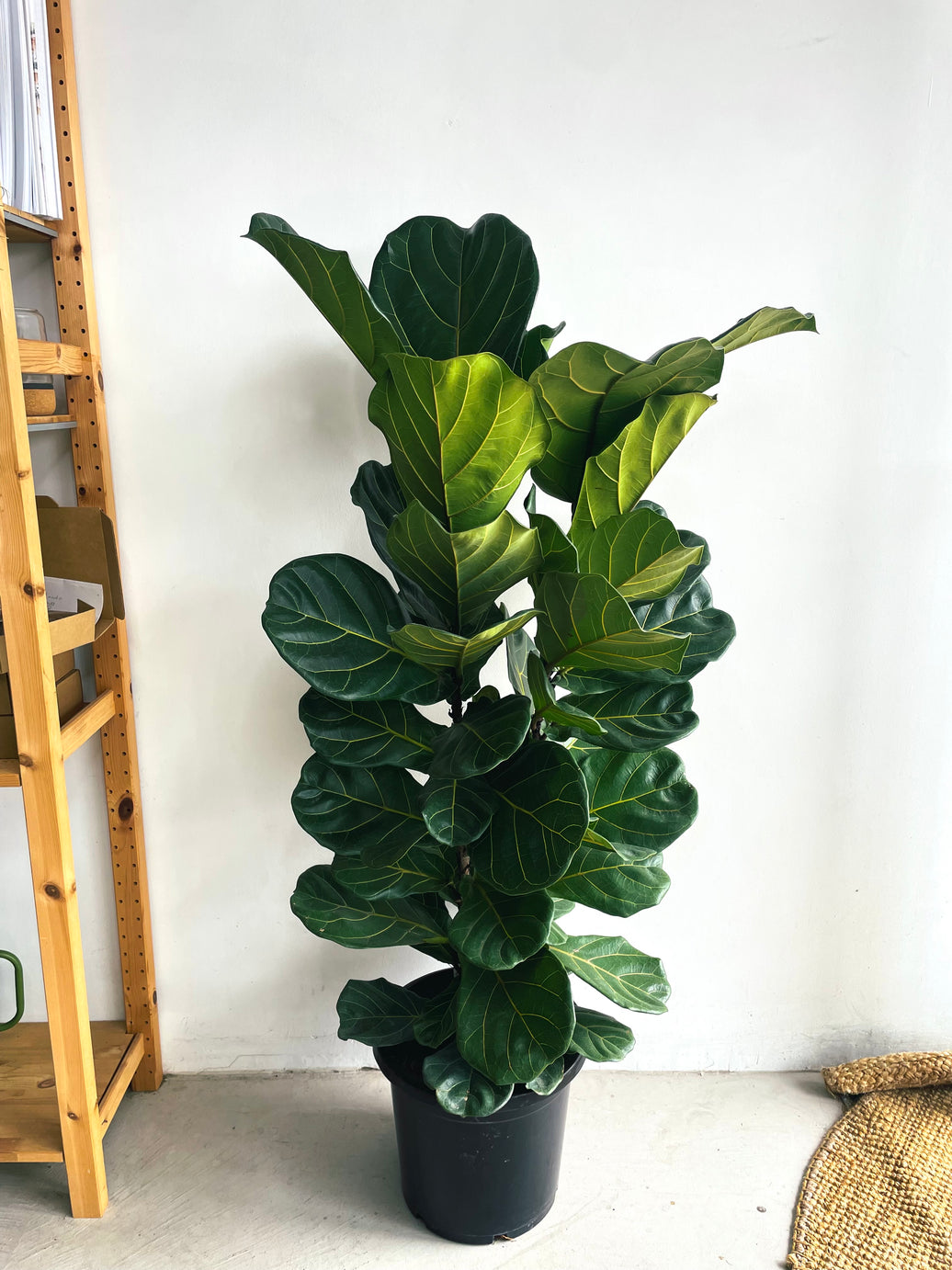
This particular plant has a wonderfully full, multi-stemmed appearance, creating a dense display of foliage from relatively low on the plant. Its established size makes it a fantastic choice for anyone wanting an immediate statement piece.
Fiddle Leaf Figs prefer a quality, well-draining potting mix that retains enough moisture to support healthy growth while allowing excess water to escape freely. A nutrient-rich mix containing organic material and aerating ingredients such as perlite, pumice or fine bark is ideal.
They enjoy warm, stable temperatures, generally performing best between approximately 18–28°C.
Avoid positioning your plant directly beside heating vents, air conditioners or frequently opened external doors, as sudden temperature changes and cold draughts can cause stress.
Moderate humidity is beneficial, although established Fiddle Leaf Figs generally adapt well to normal indoor humidity levels when their other growing conditions are suitable.
As the plant grows, older leaves may naturally be shed from the lower stems. This is a normal part of its development, particularly as the plant becomes taller and more tree-like.
If you'd prefer to maintain a bushier shape, selective pruning during the warmer growing months can encourage branching and help control the overall height.
When repotting, choose a container only slightly larger than the existing root ball and avoid unnecessarily disturbing the roots.
With plenty of light, consistent watering and a stable environment, the Fiddle Leaf Fig can become a magnificent long-term feature in your home.
Pet Friendly?
No. The Fiddle Leaf Fig is toxic to cats and dogs if chewed or ingested.
Like other members of the Ficus genus, Ficus lyrata contains a milky latex sap that can cause irritation to the mouth, lips and digestive system.
Symptoms following ingestion may include drooling, vomiting and gastrointestinal discomfort. The sap can also cause skin irritation in sensitive individuals.
We recommend keeping this plant out of reach of curious pets and children, and wearing gloves when pruning or handling damaged stems.
If you suspect your pet has ingested part of the plant, contact your veterinarian for advice.
Good to Know
The Fiddle Leaf Fig has become one of the most recognisable indoor plants in the world, thanks to its dramatic foliage and elegant, architectural growth habit. Its large leaves make it a natural focal point, particularly in rooms with high ceilings and plenty of natural light.
One thing worth knowing about Fiddle Leaf Figs is that they aren't particularly fond of sudden changes. Moving them between environments with significantly different light levels, temperatures or humidity can sometimes trigger leaf drop while the plant adjusts.
When bringing your new Ficus home, choose a suitable position and allow it time to settle. Avoid repeatedly moving it around the house or changing its care routine unnecessarily.
You may also notice that fresh new leaves emerge a lighter, brighter green before gradually darkening and becoming firmer as they mature. This is completely normal and one of the lovely things about watching a Fiddle Leaf Fig grow.
Because of their large leaves, Fiddle Leaf Figs can collect dust over time. Gently wiping the foliage with a soft, damp cloth will help keep it looking beautiful and allow the leaves to receive as much available light as possible.
Occasional minor marks, natural creases or variations in leaf shape are also normal, particularly on larger, established plants. These characteristics are part of what makes every Fiddle Leaf Fig unique.
The plant pictured is an impressive, well-established specimen with multiple upright stems, abundant deep green foliage and beautiful fresh growth. Its generous size makes it a fantastic option for anyone wanting to make an immediate impact in their space.
• We photograph as many of our plants as possible; however, some listings may occasionally use supplier images.
• As plants are living things, every plant is unique and natural variations in size, colour and fullness should be expected.
• The plant you receive may not be the exact one pictured, but we'll always hand-pick a beautiful, healthy plant we'd happily display in our own home.