




Light Pink Anne Nerve Plant | Fittonia albivenis | 70mm Nursery Pot
About Light Pink Anne Nerve Plant | Fittonia albivenis | 70mm Nursery Pot
Product Description
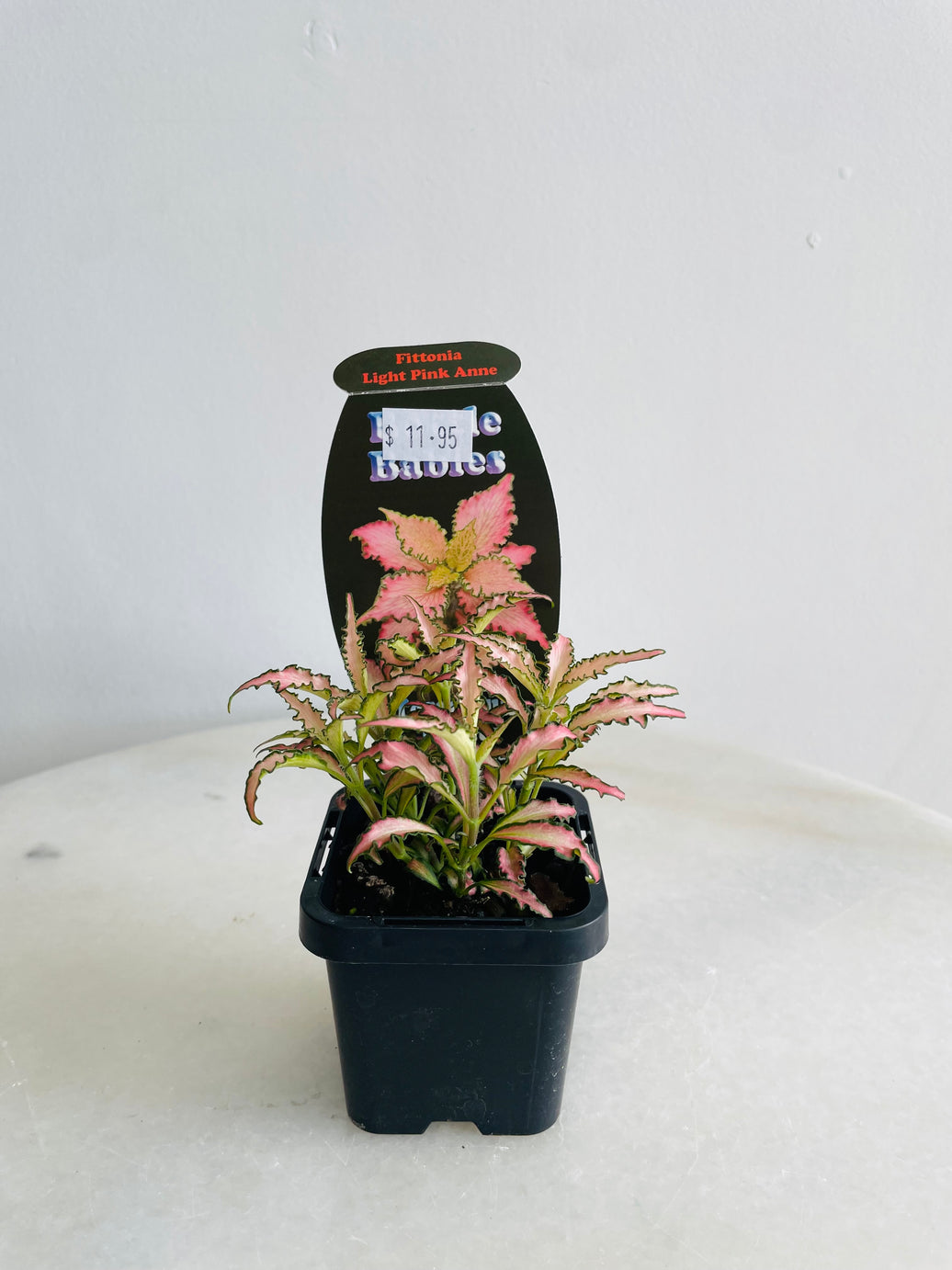
Pretty in pink and full of personality! Meet the Light Pink Anne Nerve Plant, a delightful little beauty that proves you don't need to be big to make a statement.
With its gorgeous blush-pink foliage, soft lime-green highlights and beautifully ruffled, dark green edges, this eye-catching Fittonia is anything but ordinary. Its narrow, delicately textured leaves create a wonderfully playful appearance, while its compact, bushy growth makes it perfect for adding a splash of colour to shelves, desks and smaller indoor spaces.
And while it might look delicate, Light Pink Anne is a rewarding little plant once you understand what makes it happy. Give it bright, indirect light, consistent moisture and a little extra humidity, and it'll reward you with a beautiful display of colourful foliage.
Why You'll Love It
• Gorgeous blush-pink leaves with soft green highlights and contrasting dark green edges.
• Beautifully ruffled, narrow foliage that adds plenty of texture and personality.
• Compact, bushy growth that's perfect for shelves, desks and smaller spaces.
• Loves warm, humid environments and makes a lovely addition to a terrarium.
• Pet-friendly foliage that's considered non-toxic to cats and dogs.
Plant Care Details
Returns Policy
For our full Returns & Refunds Policy, click here.
Light Pink Anne Nerve Plant | Fittonia albivenis | 70mm Nursery Pot
Light Pink Anne Nerve Plant | Fittonia albivenis | 70mm Nursery Pot

Same-day click and collect.

Signature gift wrapping.

Quick shipping across Australia.

Order before 12pm, Monday to Friday for same-day fulfilment.
While you’re here, explore more!
Picked a favourite already? Dangerous move. There’s a whole lot more to fall for across plants, pots, gifting and homewares.

Plants
Easy-care plants, rare finds, pet-friendly options and everything in between.

Pots
Eye-catching pots, hanging planters, stands and pieces that elevate your greenery.

Plant Health
Tools, accessories and trusted brands to keep your plants thriving.

Homewares
Unique candles, textiles and design-led pieces for your space.

Bath & Body
Soaps, scrubs, oils and self-care essentials. You've earned it.

Gifting
Unforgettable gifts and vouchers to wow your loved ones.

Thanks for shopping small.
You could be shopping at the big green shed. But you're not. Good call! Thanks for backing local and supporting a store with more personality, better chats and a whole lot more care.
The kindest words.


