The Details
• Botanical Name: Rhipsalis campos-portoana
• Common Name: Jungle Cactus
• Pot Size: 130mm Nursery Pot
• Plant Type: Tropical epiphytic cactus
Light
Jungle Cactus thrives in bright, indirect light, similar to the filtered sunlight it receives beneath the forest canopy in its natural habitat.
Position it near an east-facing window where it can enjoy gentle morning sunlight, or a little back from a bright north-facing window where the light is softened.
It can tolerate moderate indirect light, although growth may become slower and less dense over time.
Avoid prolonged exposure to harsh afternoon sunlight, particularly during summer, as the delicate green stems can become scorched or develop discoloured patches.
Watering
Unlike traditional desert cacti, Jungle Cactus appreciates more consistent moisture, although it still needs plenty of oxygen around its roots.
Water thoroughly when the upper third of the potting mix has dried, allowing excess water to drain freely from the nursery pot.
During spring and summer, check moisture levels regularly, as warmer temperatures and active growth may increase watering requirements.
In autumn and winter, reduce watering frequency slightly, allowing the mix to dry a little further between drinks without leaving it completely dry for extended periods.
Avoid keeping the potting mix constantly saturated, as prolonged wet conditions can lead to root rot. Thin, shrivelling stems may indicate the plant is becoming too dry, while soft, yellowing or mushy growth can suggest excessive moisture.
Feeding
Feed year-round using a balanced liquid fertiliser diluted to approximately half the manufacturer's recommended strength.
During spring and summer, fertilise every three to four weeks to support healthy stem development and encourage fuller trailing growth.
In autumn and winter, reduce feeding to approximately every six to eight weeks, adjusting according to the plant's growth rate and indoor conditions.
Because Jungle Cactus is an epiphytic species, it generally benefits from lighter, more regular feeding rather than heavy applications of fertiliser.
Growing
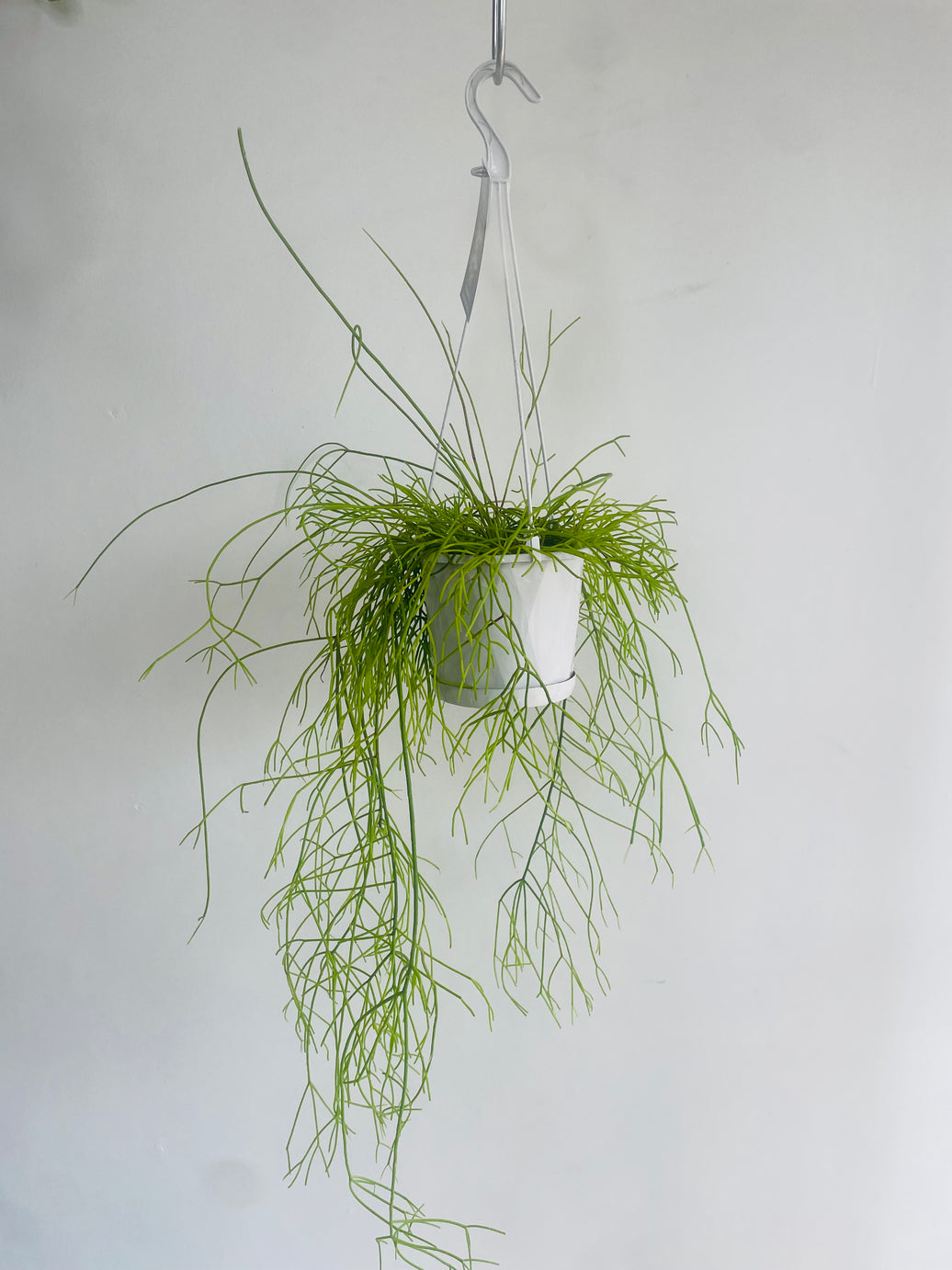
Rhipsalis campos-portoana is a tropical epiphytic cactus known for its long, slender, branching stems and beautiful cascading growth habit.
Native to Brazil, this unusual cactus naturally grows attached to trees and other surfaces in humid forest environments, where its roots are exposed to plenty of airflow and moisture drains away relatively quickly.
Its fine, cylindrical stems branch repeatedly as they mature, creating a loose, flowing curtain of greenery that can become wonderfully long and full over time.
Jungle Cactus prefers warm temperatures between approximately 18–28°C and appreciates moderate to high humidity. It can adapt to typical indoor conditions, although additional humidity can encourage healthier growth, particularly in dry environments.
Protect it from cold draughts, sudden temperature changes and direct airflow from heating or air-conditioning.
For best results, grow it in a lightweight, well-aerated potting mix that retains a little moisture without becoming waterlogged. A tropical mix containing orchid bark, perlite, coco coir and other free-draining ingredients works particularly well.
Allow the stems to trail naturally from a hanging basket or elevated planter. Occasional trimming can help maintain the desired shape, while healthy stem cuttings can be propagated to create additional plants.
Under suitable conditions, mature plants may also produce small, delicate flowers along their stems, sometimes followed by tiny berry-like fruits.
Pet Friendly?
Good news! Jungle Cactus (Rhipsalis campos-portoana) is generally considered non-toxic to cats and dogs.
It's a lovely option for households with curious pets, particularly when displayed in a hanging basket where its trailing stems can be enjoyed without being easily reached.
Although considered pet-friendly, it's still best to discourage chewing, as consuming plant material can occasionally cause mild digestive upset.
Good to Know
Despite its common name, Jungle Cactus is very different from the familiar desert cacti. It naturally grows in tropical forests and appreciates a little more moisture, humidity and protection from harsh sunlight.
Its delicate, branching stems can become surprisingly long, making it an excellent choice for hanging displays. Give it plenty of space to cascade freely and avoid placing it where the stems will be constantly brushed or disturbed.
Some of its fine stems may grow upright or outward before gradually arching and trailing under their own weight. This is completely natural and contributes to its wonderfully untamed appearance.
When repotting, avoid moving into an excessively large container. Choose a pot only slightly larger than the existing root system and use a lightweight, free-draining mix that provides good aeration.
• We photograph as many of our plants as possible; however, some listings may occasionally use supplier images.
• As plants are living things, every plant is unique and natural variations in size, colour and fullness should be expected.
• The plant you receive may not be the exact one pictured, but we'll always hand-pick a beautiful, healthy plant we'd happily display in our own home.