The Details
• Botanical Name: Nepenthes 'Gaya'
• Common Name: St Gaya Tropical Pitcher Plant
• Pot Size: 100mm Nursery Pot
• Plant Type: Tropical carnivorous pitcher plant
Light
Nepenthes 'Gaya' thrives in bright, indirect light and appreciates a consistently well-lit position.
A spot near an east-facing window with gentle morning sunshine is ideal. Bright filtered light throughout the day also works beautifully, particularly in a warm room with good natural light.
Some gentle direct sunlight can encourage stronger growth and more colourful pitchers, but prolonged exposure to harsh afternoon sun can scorch the foliage and damage the delicate traps.
If the plant is receiving insufficient light, you may notice slower growth, reduced pitcher production or leaves that develop without forming mature pitchers.
A suitable full-spectrum grow light can be helpful in darker rooms or during Melbourne's shorter winter days.
Watering
Unlike desert plants, tropical pitcher plants prefer their growing medium to remain consistently moist without becoming waterlogged.
Water when the surface of the mix begins to feel slightly dry, ensuring the root zone never dries out completely.
Water quality is particularly important. Rainwater, distilled water or reverse-osmosis water is preferred, as Nepenthes can be sensitive to mineral and salt accumulation from unsuitable water sources.
Allow excess water to drain freely after watering. Although they enjoy moisture, Nepenthes roots still need oxygen, so avoid leaving the pot permanently standing in a saucer of water.
During warmer weather, check moisture levels more frequently. In cooler conditions, watering can be reduced slightly, but the growing medium should never be allowed to become completely dry.
Newly purchased plants may need a little time to adjust to their new environment, particularly if humidity levels differ from where they were previously grown.
Feeding
Here's where things get interesting! Unlike most houseplants, Nepenthes obtain additional nutrients by capturing and digesting insects inside their specialised pitchers.
Healthy plants growing in suitable conditions generally don't require conventional fertiliser, particularly if they occasionally catch insects naturally.
Avoid applying standard-strength houseplant fertiliser directly to the potting mix, as excess nutrients and mineral salts can damage the sensitive root system.
If supplementary feeding is necessary, use only a very weak, appropriately diluted fertiliser formulated or recommended for Nepenthes, and apply sparingly during active growth.
In warmer months, occasional feeding may support growth, while cooler periods generally require little to no supplementation.
Never place meat, cheese or other household foods inside the pitchers. These can rot and damage the traps.
Growing
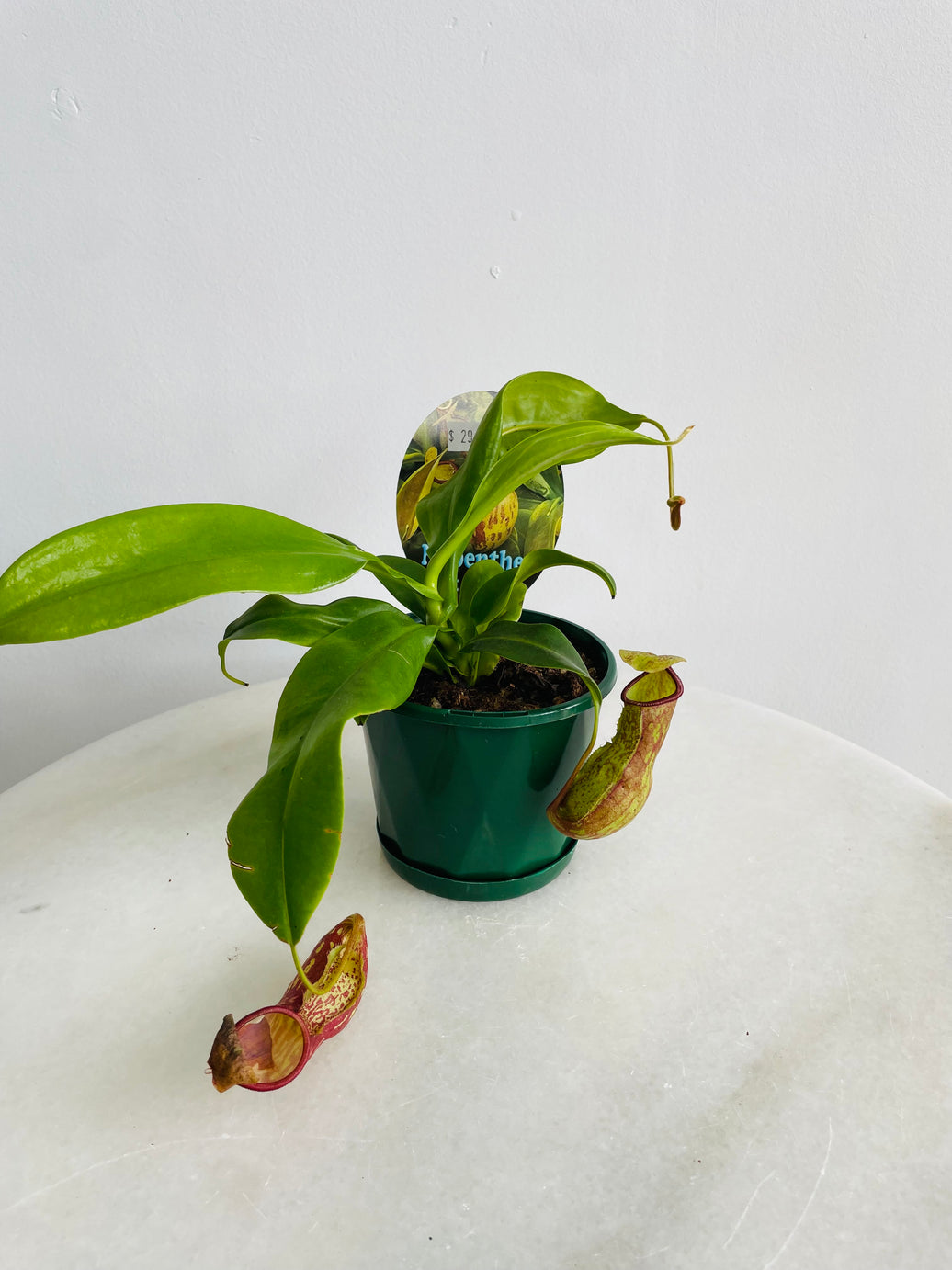
Nepenthes 'Gaya' is a tropical hybrid prized for its colourful pitchers, vigorous growth and relatively forgiving nature.
Its elongated green leaves grow along developing stems, with specialised tendrils extending from the leaf tips. Under suitable conditions, these tendrils develop into the plant's distinctive hanging pitchers.
The pitchers begin as small developing buds before gradually inflating into their characteristic tubular shape. As they mature, their beautiful mottled markings become more prominent.
This variety generally appreciates warm temperatures between approximately 18–30°C and benefits from moderate to high humidity.
While 'Gaya' is more adaptable than many Nepenthes varieties, maintaining humidity around 50–70% or higher can help encourage consistent pitcher production. Good airflow is also important to prevent stagnant conditions.
For potting, choose a loose, airy, moisture-retentive medium with excellent drainage. A suitable Nepenthes mix may include long-fibre sphagnum moss, orchid bark and perlite, using low-mineral ingredients.
Avoid conventional nutrient-rich potting mixes, as these can retain excessive nutrients and become too dense around the roots.
As the plant matures, its stems can lengthen and begin to climb or trail. Providing a support, allowing it to cascade from a hanging basket or positioning it on a shelf can help showcase its impressive pitchers.
In Melbourne, indoor growing is generally recommended, particularly during winter. Protect the plant from cold draughts, frost, heaters and sudden temperature changes.
Pet Friendly?
Nepenthes are generally considered non-toxic to cats and dogs, making them a more pet-friendly option than many popular tropical houseplants.
However, chewing the foliage or pitchers may still cause mild digestive upset, and curious pets can easily damage the delicate traps.
Position your plant somewhere it can grow undisturbed, particularly if you have an inquisitive cat who enjoys investigating hanging greenery.
Good to Know
Those pitchers are completely natural! Each one is a specialised leaf structure designed to attract and capture insects.
The liquid inside the pitchers plays an important role in digestion, so avoid deliberately emptying it. If a pitcher has lost its fluid during transport or handling, a small amount of suitable low-mineral water may help prevent it from drying out, although new pitchers will develop naturally under good conditions.
It's perfectly normal for older pitchers to gradually brown and die back as the plant grows. Once completely dry, they can be carefully removed using clean scissors.
Pitcher production is strongly influenced by light, humidity and overall growing conditions. A healthy Nepenthes may continue producing leaves even when conditions aren't quite right for developing new traps.
The plant may also temporarily stop producing pitchers while adjusting to a new home. With stable conditions and a little patience, fresh pitchers should begin developing again.
• We photograph as many of our plants as possible; however, some listings may occasionally use supplier images.
• As plants are living things, every plant is unique and natural variations in size, colour and fullness should be expected.
• The plant you receive may not be the exact one pictured, but we'll always hand-pick a beautiful, healthy plant we'd happily display in our own home.