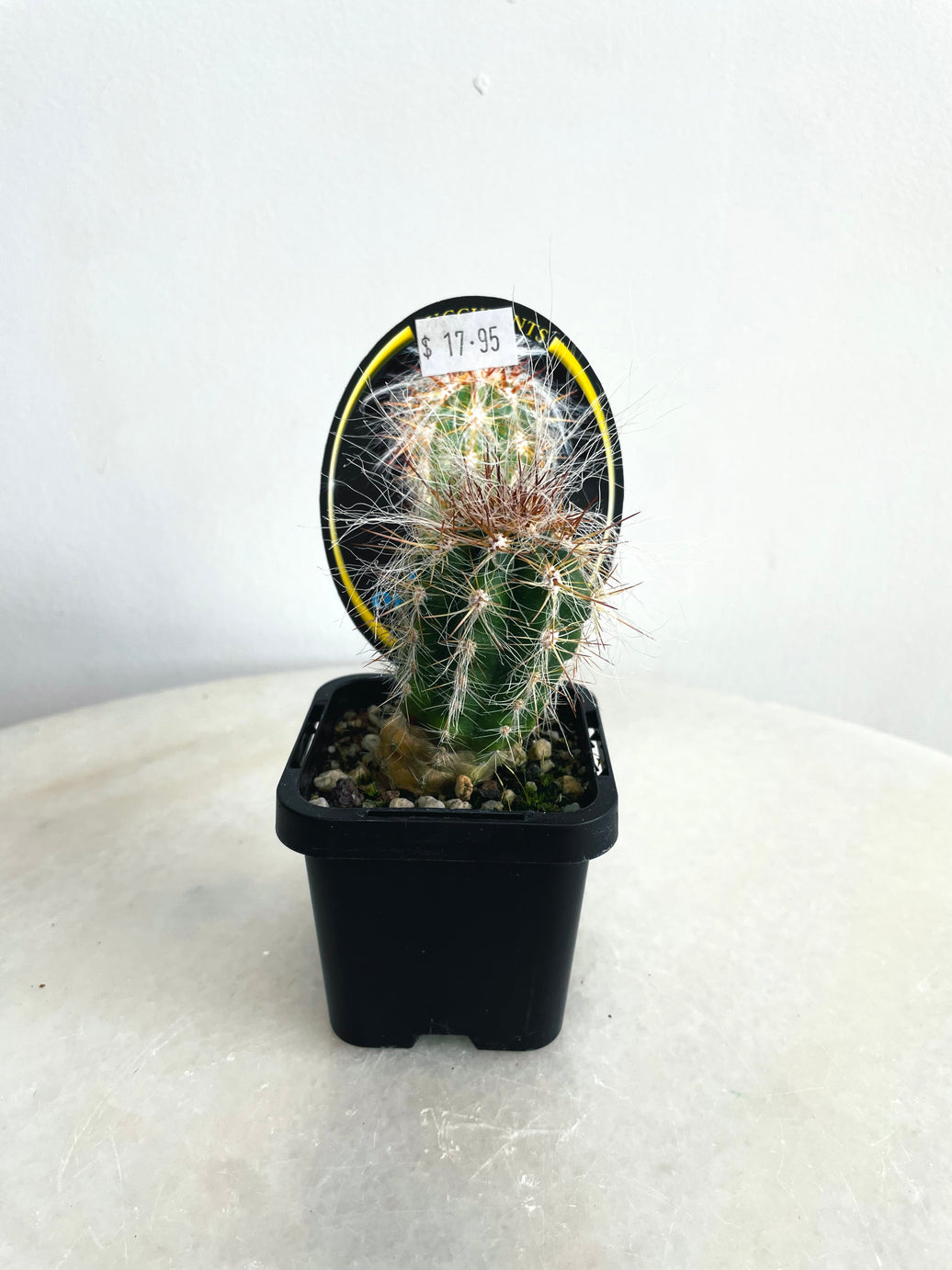

The Details
• Botanical Name: Oreocereus neocelsianus
• Common Name: Old Man of the Andes
• Pot Size: 70mm Nursery Pot
• Plant Type: Columnar desert cactus
Light
The Old Man of the Andes loves bright light and thrives in a position receiving several hours of direct sunlight each day.
Indoors, a sunny north-facing window is ideal, providing the strong natural light needed to maintain healthy, compact growth and its distinctive woolly covering.
Outdoors, this species appreciates a sunny, well-ventilated position. However, young plants or those previously grown under greenhouse conditions should be gradually introduced to stronger sunlight to prevent scorching.
In Melbourne, it can enjoy outdoor sunshine during the warmer months, provided it is protected from prolonged wet weather and extreme conditions.
Insufficient light may cause the cactus to develop weak, elongated growth, so avoid placing it in dimly lit rooms.
Watering
Despite its fluffy appearance, this is very much a drought-tolerant desert cactus that prefers things on the dry side.
During spring and summer, water thoroughly once the potting mix has dried out completely. Allow excess water to drain freely and never leave the plant sitting in standing water.
As temperatures begin to cool in autumn, gradually reduce watering to match its slower growth.
During winter, keep the growing medium predominantly dry, particularly if the plant is experiencing cooler temperatures. A small amount of water may occasionally be needed in a consistently warm indoor environment, but avoid watering unnecessarily.
The Old Man of the Andes is especially sensitive to prolonged moisture around its roots during cool conditions, making excellent drainage essential.
Try to water directly onto the potting mix rather than over the cactus itself. Keeping its woolly covering dry helps prevent moisture from becoming trapped among the hairs.
Feeding
Feed your Old Man of the Andes throughout the year according to its growing conditions and seasonal activity.
During spring and summer, apply a diluted cactus and succulent fertiliser approximately every four to six weeks to support healthy, steady growth.
As temperatures cool and growth slows, reduce the frequency of feeding.
During a cool winter rest, fertilising is generally unnecessary. Resume regular feeding when warmer conditions encourage active growth.
Choose a balanced or relatively low-nitrogen fertiliser formulated for cacti and succulents, and avoid excessive feeding, which can encourage weak or unnaturally rapid growth.
Growing
Oreocereus neocelsianus is a distinctive columnar cactus native to the high-altitude Andean regions of South America, particularly Bolivia and neighbouring areas.
Its upright green stems feature prominent vertical ribs lined with clusters of sharp spines and long, silky white hairs. As the cactus matures, this woolly covering can become increasingly noticeable, creating the beautiful shaggy appearance responsible for its common name.
In its natural habitat, the white hairs help shield the plant from intense mountain sunlight while providing some protection against harsh environmental conditions.
Over time, this species can develop into a substantial upright cactus, although growth is generally quite slow when cultivated in containers.
For best results, use a very free-draining, mineral-rich growing medium that allows water to pass through quickly while providing excellent aeration around the roots.
Our Cacti & Succulent Mix is a great choice, offering the drainage and structure needed to support healthy root development.
Choose a pot with drainage holes and avoid moving the plant into a significantly larger container before its roots require additional space.
Although adapted to cool mountain environments, this species still requires protection from prolonged cold, excessive winter rainfall and wet potting mix.
In Melbourne, a bright, sheltered position or well-ventilated greenhouse is ideal during winter. Established plants may tolerate brief light frosts when completely dry, but young potted specimens are best protected from freezing conditions.
When repotting or handling, use thick gardening gloves or folded newspaper. Those beautiful white hairs conceal some seriously sharp spines!
Pet Friendly?
Oreocereus neocelsianus is not generally considered chemically toxic to cats or dogs.
However, it is not considered pet-safe due to its sharp spines, which can cause painful injuries to curious pets.
Despite its soft, fluffy appearance, the cactus has rigid spines hidden among its white hairs. Keep it out of reach of pets and young children to prevent accidental contact.
Good to Know
Those long, white hairs are a completely natural feature of the Old Man of the Andes and are one of its most distinctive characteristics.
The woolly covering helps protect the cactus in its exposed mountain habitat, where sunlight can be intense and temperatures can fluctuate dramatically.
Although the hairs may look soft and inviting, they conceal sharp spines. This is definitely a plant to admire rather than touch!
Avoid spraying or misting the white hairs, as excess moisture can become trapped within the woolly covering. If dust accumulates, gently remove it using a soft, dry brush.
Young plants often begin as a single upright column, gradually becoming taller and more substantial as they mature.
Its compact 70mm nursery pot makes it a wonderful starting point for collectors who enjoy watching unusual cacti develop over time.
• We photograph as many of our plants as possible; however, some listings may occasionally use supplier images.
• As plants are living things, every plant is unique and natural variations in size, colour and fullness should be expected.
• The plant you receive may not be the exact one pictured, but we'll always hand-pick a beautiful, healthy plant we'd happily display in our own home.