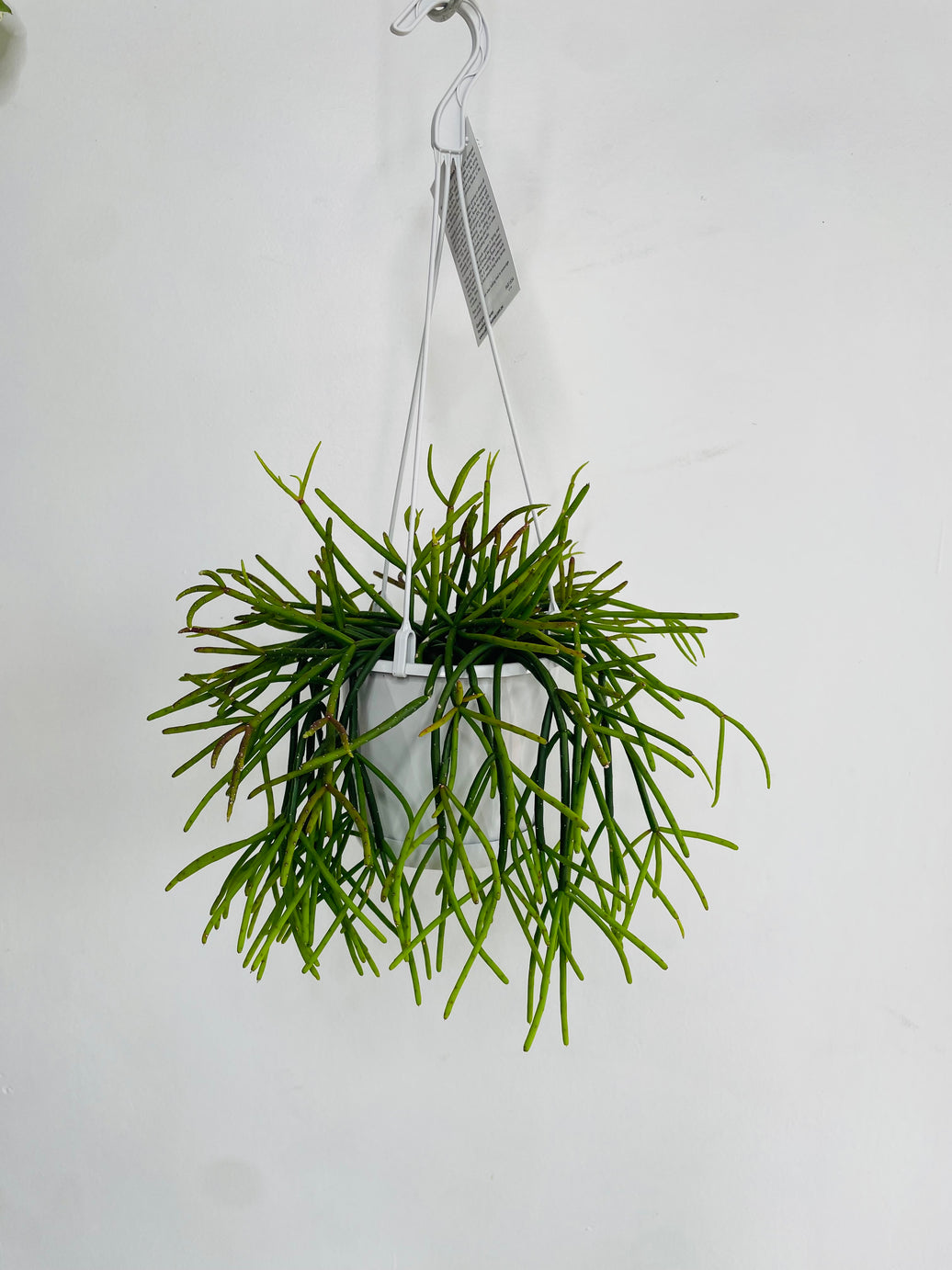
The Details
• Botanical Name: Rhipsalis baccifera subsp. mauritiana
• Common Name: Mistletoe Cactus
• Pot Size: 130mm Nursery Pot
• Plant Type: Tropical epiphytic cactus / Trailing succulent
Light
Mistletoe Cactus thrives in bright, indirect light, where its long, slender stems can develop healthy growth and maintain their beautiful green colouring.
Unlike traditional desert cacti, this species naturally grows in tropical and subtropical environments, often amongst the branches of trees where sunlight is filtered through the surrounding canopy.
Indoors, position your plant near an east-facing window where it can enjoy gentle morning sunshine, or in a bright room with plenty of filtered natural light.
It can tolerate moderate indirect light, making it a versatile choice for different indoor environments. However, growth may become slower and less vigorous in darker conditions.
Avoid prolonged exposure to harsh afternoon sunshine, particularly through hot north- or west-facing windows, as intense sunlight can cause the slender stems to become discoloured or scorched.
If moving your plant into a brighter position, introduce it to stronger light gradually.
Watering
Although Mistletoe Cactus belongs to the cactus family, its watering requirements are quite different from those of traditional desert cacti.
As a tropical epiphyte, it appreciates regular moisture during active growth while still requiring excellent drainage and plenty of oxygen around its roots.
Water thoroughly when the upper portion of the potting mix has dried out, allowing excess water to drain freely from the nursery pot.
During spring and summer, check the soil regularly, particularly if your plant is hanging in a warm, bright position where the potting mix may dry more quickly.
Its fleshy stems store some moisture, allowing it to tolerate occasional dryness. However, allowing the potting mix to remain completely dry for extended periods may cause the stems to wrinkle, shrivel or lose their firmness.
During autumn and winter, reduce watering frequency as temperatures cool and growth naturally slows.
Avoid allowing the roots to sit in constantly saturated soil, as prolonged wet conditions can lead to root rot.
The goal is to provide consistent, moderate moisture while allowing the growing medium to partially dry between waterings.
Feeding
Mistletoe Cactus benefits from regular, gentle feeding to support healthy stem development and encourage a full, cascading growth habit.
During spring and summer, apply a diluted balanced liquid fertiliser approximately every three to four weeks while the plant is actively growing.
During autumn and winter, reduce feeding to approximately every six to eight weeks if the plant continues producing new growth. If growth has stopped, wait until active growth resumes.
Rhipsalis species generally respond best to gentle feeding rather than heavy fertiliser applications, so avoid excessive concentrations that may damage their relatively delicate root systems.
Growing
Rhipsalis baccifera subsp. mauritiana is a tropical epiphytic cactus recognised for its long, slender, cylindrical stems and beautifully cascading growth habit.
The plant produces numerous branching stems that begin upright or outward-facing before gradually arching and trailing over the sides of its container.
As it matures, these stems continue to lengthen and branch, creating an increasingly full and flowing display. Established specimens can develop impressively long trailing stems when grown under favourable conditions.
Unlike traditional desert cacti, Mistletoe Cactus naturally grows attached to trees and other surfaces, where its roots receive excellent airflow and access to organic material.
For best results, grow your Mistletoe Cactus in a loose, well-aerated potting medium that provides good drainage while retaining enough moisture to support healthy tropical growth.
Our Tropical Mix is a suitable choice, offering a balance of moisture retention and aeration. Our Lightweight/Hanging Mix is another good option for hanging displays, where reducing the overall weight of the planter can be beneficial.
Mistletoe Cactus appreciates warm temperatures, moderate humidity and good airflow. Although it enjoys humidity, established plants can generally adapt well to typical indoor conditions.
Avoid placing your plant directly beside heating or cooling vents, as excessively dry air can contribute to shrivelling stems.
Mature plants may produce small, pale flowers along their stems, which can develop into little translucent, berry-like fruits. These berries are one of the reasons this species is commonly known as Mistletoe Cactus.
If the stems become excessively long or uneven, they can be carefully trimmed to maintain the plant's shape. Healthy stem cuttings can also be propagated to create new plants.
Pet Friendly?
Yes! Mistletoe Cactus (Rhipsalis baccifera) is generally considered non-toxic to cats and dogs, making it a lovely addition to pet-friendly indoor plant collections.
Unlike many traditional cacti, its slender stems are typically spineless or have only very small, inconspicuous bristles, making it a more approachable option for households with curious pets.
However, it's still best to discourage pets from chewing on the stems, as consuming plant material can occasionally cause mild digestive upset.
Good to Know
Despite its common name, Mistletoe Cactus isn't related to true mistletoe. Its name comes from the small, berry-like fruits that can develop after flowering, resembling those of mistletoe plants.
Rhipsalis baccifera is particularly interesting because it's one of the few cactus species with a natural distribution extending beyond the Americas, occurring in parts of Africa and surrounding regions.
Unlike most desert cacti, this species is adapted to growing in sheltered tropical environments, so it appreciates filtered light and more consistent moisture.
Its slender stems naturally branch and trail as the plant matures. Some stems may grow upwards or outwards before eventually arching downwards under their own weight.
You may notice small dots or tiny bumps along the stems. These are often natural areoles, the specialised structures from which cactus growth, flowers and branches can develop.
New growth typically appears a brighter, fresher green before gradually developing a deeper colour as the stems mature.
• We photograph as many of our plants as possible; however, some listings may occasionally use supplier images.
• As plants are living things, every plant is unique and natural variations in size, colour and fullness should be expected.
• The plant you receive may not be the exact one pictured, but we'll always hand-pick a beautiful, healthy plant we'd happily display in our own home.