The Details
• Botanical Name: Rhipsalis sp.
• Common Name: Rhipsalis / Mistletoe Cactus
• Pot Size: 200mm Hanging Basket
• Plant Type: Tropical epiphytic cactus / Trailing houseplant
Light
Rhipsalis thrives in bright, indirect light, making it a wonderful choice for well-lit indoor spaces.
Unlike most desert cacti, these tropical beauties naturally grow beneath the filtered canopy of trees, so they don't need intense direct sunlight to thrive.
Position your Rhipsalis near an east-facing window where it can enjoy gentle morning sunshine, or in a bright room with plenty of filtered natural light.
It can tolerate moderate indirect light, although growth may become slower and less dense in darker conditions.
Avoid prolonged exposure to harsh afternoon sunshine, particularly through hot north- or west-facing windows, as this can cause the delicate stems to yellow, redden or become scorched.
Watering
Although Rhipsalis belongs to the cactus family, its watering requirements are quite different from those of traditional desert cacti.
As a tropical epiphyte, it appreciates more regular moisture while still needing plenty of airflow around its roots.
Water thoroughly when the upper portion of the potting mix has dried out, allowing any excess water to drain freely from the hanging basket.
During warmer months, check the potting mix regularly, as hanging baskets can dry out more quickly than standard nursery pots, particularly when positioned in warm or well-ventilated spaces.
In cooler months, reduce watering frequency as growth slows and the potting mix takes longer to dry.
Avoid allowing the plant to remain completely dry for extended periods, as the fine stems may begin to wrinkle or lose their firmness. Equally, consistently wet conditions can lead to root rot.
The aim is to maintain a comfortable balance between moisture and aeration rather than treating this plant like a drought-loving desert cactus.
Feeding
Rhipsalis benefits from regular, gentle feeding throughout the year, with frequency adjusted according to its growth and seasonal conditions.
During spring and summer, apply a diluted balanced liquid fertiliser approximately every three to four weeks to support healthy stem development and fuller trailing growth.
During autumn and winter, reduce feeding to approximately every six to eight weeks if the plant is continuing to grow. If growth has stopped, wait until it resumes before fertilising again.
Avoid overly concentrated fertilisers, as Rhipsalis has relatively delicate roots and generally responds better to smaller, more frequent applications.
Growing
Rhipsalis is an epiphytic tropical cactus, meaning it naturally grows attached to trees and other surfaces rather than directly in the ground.
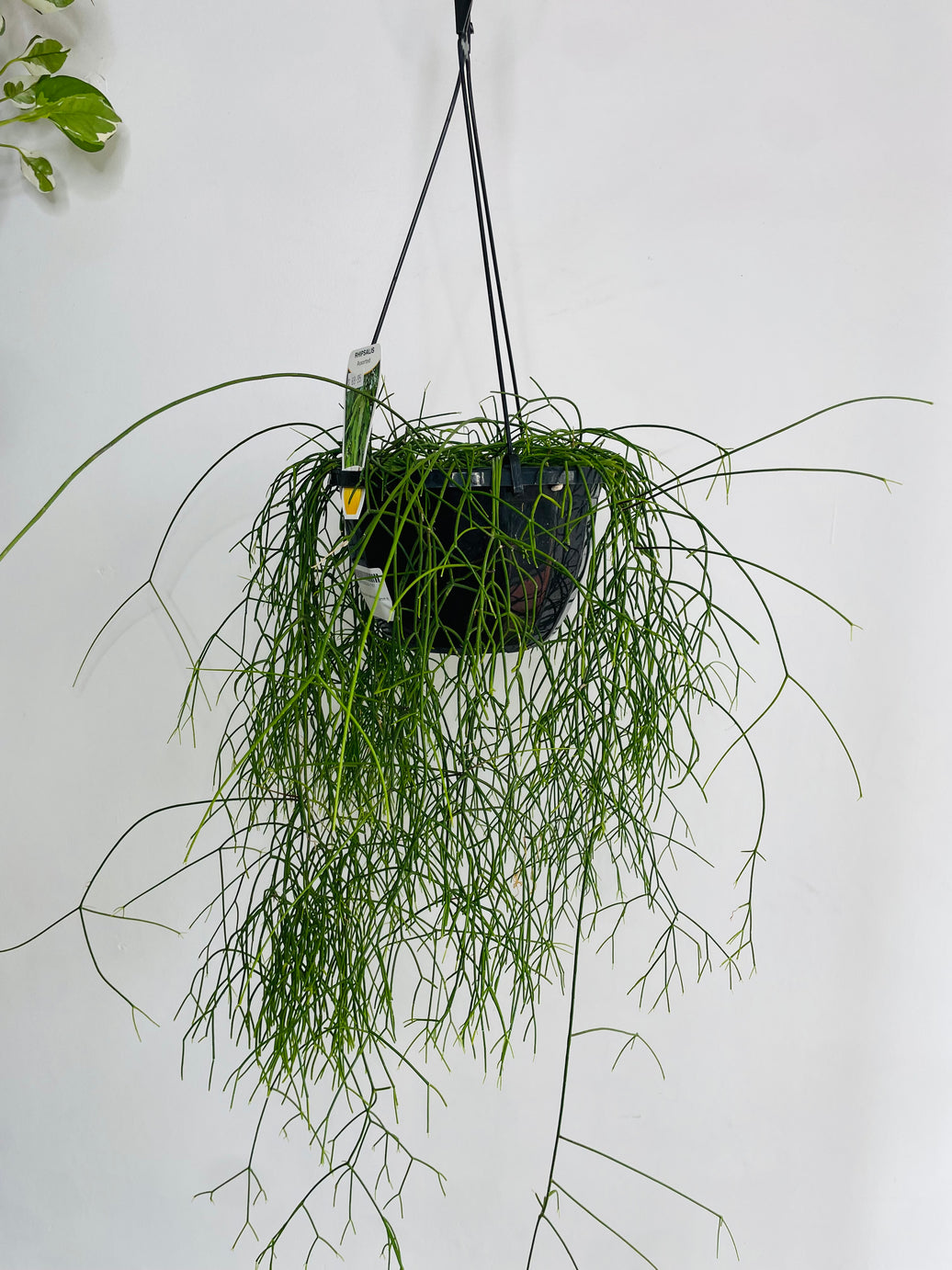
Its slender, cylindrical green stems branch repeatedly as they mature, gradually creating a dense network of trailing growth.
Over time, the stems can become impressively long, making this plant particularly well suited to hanging baskets where its natural cascading habit can be appreciated.
Rhipsalis prefers a loose, airy growing medium that provides good drainage while retaining a little moisture between waterings.
Our Tropical Mix is a suitable option for this plant, providing a balance of moisture retention and aeration to help support healthy root development.
For hanging baskets, a lighter, free-draining mix can also work well, particularly where reducing the overall weight of the planter is important.
Maintain good airflow around the plant and avoid positioning it directly beside heating or cooling vents, which can cause the fine stems to dry out excessively.
Rhipsalis generally enjoys average indoor temperatures and appreciates moderate humidity, although established plants can adapt to typical household conditions.
As it matures, you may notice small flowers developing along the stems, sometimes followed by little berry-like fruits. Flowering varies depending on the species, maturity and growing conditions.
If the plant becomes too long or uneven, individual stems can be trimmed to maintain its shape. Healthy cuttings can also be propagated to create new plants.
Pet Friendly?
Rhipsalis species are generally considered non-toxic to cats and dogs, making them a popular option for pet-friendly indoor plant collections.
However, because this plant has only been identified to genus level, its exact species has not been confirmed.
As with any houseplant, it's best to discourage pets from chewing on the stems, as consuming plant material may still cause mild digestive upset.
Good to Know
This Rhipsalis has been supplied without a confirmed species identification, so we've listed it under the broader Rhipsalis genus rather than assigning a botanical name that may be incorrect.
Its long, slender, repeatedly branching stems give it a beautiful, almost hair-like appearance, making it especially effective when displayed in a hanging basket.
Unlike desert cacti, Rhipsalis naturally grows in tropical environments and appreciates more regular watering, filtered light and a little humidity.
As the plant continues to grow, its stems will naturally extend and branch, creating an increasingly full and flowing display.
• We photograph as many of our plants as possible; however, some listings may occasionally use supplier images.
• As plants are living things, every plant is unique and natural variations in size, colour and fullness should be expected.
• The plant you receive may not be the exact one pictured, but we'll always hand-pick a beautiful, healthy plant we'd happily display in our own home.