The Details
• Botanical Name: Senecio rowleyanus (syn. Curio rowleyanus)
• Common Name: String of Pearls, String of Beads
• Pot Size: 100mm Nursery Pot
• Plant Type: Trailing Succulent
Light
The String of Pearls absolutely loves bright light, and providing enough of it is one of the most important factors in keeping those gorgeous little pearls plump, healthy and growing beautifully.
Position your plant somewhere it receives plenty of bright, indirect sunlight throughout the day, ideally with a few hours of gentle direct morning sun.
An east-facing window is often an excellent choice, while a bright north-facing window can also work beautifully when the plant is protected from intense summer afternoon sunlight.
Although String of Pearls enjoys sunshine, prolonged exposure to harsh direct sunlight, particularly through glass during Melbourne's warmer months, can cause the foliage to scorch or become stressed.
It's also important to ensure light reaches the top of the pot, not just the trailing stems. When the crown receives insufficient light, growth can become sparse and the pearls near the soil surface may gradually disappear.
In lower-light environments, the stems may stretch, producing smaller pearls spaced further apart as the plant searches for additional sunlight.
For a beautifully full, compact plant with strong trailing growth, plenty of natural light is essential.
Watering
When it comes to watering String of Pearls, less is often more!
Those adorable little green pearls are actually specialised leaves designed to store water, allowing the plant to tolerate periods of dryness much better than constantly damp conditions.
Allow the potting mix to dry thoroughly, or almost completely, before watering again. Once dry, water the plant thoroughly and allow any excess moisture to drain freely from the bottom of the nursery pot.
During spring and summer, when the plant is actively growing, watering will generally be required more frequently.
In autumn and winter, reduce watering significantly as cooler temperatures and shorter daylight hours slow growth and evaporation.
One of the easiest ways to monitor your plant's moisture needs is to observe the pearls themselves. When well hydrated, they should appear firm and plump. As the plant begins using its stored water, the pearls may become slightly softer or develop subtle wrinkles.
A little wrinkling can indicate that it's time to check the potting mix, although severely dehydrated or damaged roots can also cause shrivelling, so always assess the soil moisture before watering.
Overwatering is one of the most common problems with String of Pearls. Constantly damp soil can cause the delicate stems and roots to rot, often resulting in mushy pearls and sections of the plant collapsing.
Avoid allowing water to collect around the crown for extended periods, particularly during cooler weather.
The secret is simple: plenty of light, excellent drainage and allowing the potting mix to dry between waterings.
Feeding
String of Pearls isn't a particularly heavy feeder, but occasional fertilising can help encourage healthy foliage and strong trailing growth.
During spring and summer, apply a balanced liquid fertiliser or a fertiliser formulated for succulents approximately every 4–6 weeks at a diluted strength.
This will provide essential nutrients without overwhelming the plant's relatively delicate root system.
During autumn and winter, reduce the frequency and strength of feeding considerably, particularly if the plant's growth has slowed.
If your String of Pearls continues actively growing in a warm, brightly lit position, occasional light feeding may still be beneficial.
Avoid excessive fertiliser applications, as nutrient build-up can damage the roots and negatively affect the plant's overall health.
Growing
String of Pearls is a fascinating trailing succulent that naturally grows across the ground in its native habitat, forming spreading mats of slender stems and spherical leaves.
When grown in a hanging planter or elevated pot, these stems cascade beautifully over the edges, creating the characteristic strings of green pearls that make this plant so popular.
With favourable conditions, individual stems can eventually reach approximately 60–90cm or longer, creating a spectacular trailing display.
Each pearl has a narrow, translucent window along its surface, allowing light to penetrate deeper into the leaf. This clever adaptation helps the plant photosynthesise while minimising water loss.
String of Pearls prefers a very free-draining, open potting mix that allows excess moisture to escape quickly and provides plenty of oxygen around the roots.
A gritty succulent mix containing ingredients such as pumice, perlite, coarse sand or other mineral components is ideal. Avoid heavy, moisture-retentive mixes that remain damp for extended periods.
The plant generally performs best in warm conditions with good airflow and should be protected from frost and prolonged exposure to cold, wet weather.
Although it can tolerate warm temperatures, intense heat combined with direct afternoon sunlight may cause stress, particularly when grown in a small nursery pot.
One of the wonderful things about String of Pearls is how easily it can be propagated. Healthy stem cuttings can be laid across the surface of a lightly moist, free-draining mix, where the nodes can gradually develop roots.
You can also gently arrange longer stems across the surface of the existing pot to encourage additional rooting and help maintain a fuller appearance.
Under suitable conditions, mature plants may produce small, white, brush-like flowers with a delightful cinnamon-like fragrance.
Flowering is generally encouraged by bright light and a period of cooler, relatively dry conditions, although indoor flowering can be less predictable.
With the right balance of sunlight, careful watering and excellent drainage, String of Pearls can become a beautifully full and wonderfully unusual trailing feature.
Pet Friendly?
No. String of Pearls is toxic to cats and dogs if ingested.
The plant contains compounds that can cause gastrointestinal irritation, with possible symptoms including drooling, vomiting and diarrhoea.
Its small, round leaves can also be particularly tempting to curious pets, so extra care should be taken when choosing where to display it.
We recommend keeping String of Pearls safely out of reach of cats, dogs and young children.
The plant's sap may also cause skin irritation in sensitive individuals, so wearing gloves when pruning or propagating is a sensible precaution.
If you suspect your pet has ingested any part of the plant, contact your veterinarian for advice.
Good to Know
String of Pearls is one of the most recognisable trailing succulents, and its unusual foliage is much more than just a pretty feature. Those tiny spherical leaves are specially adapted to store water, making the plant remarkably efficient at surviving dry conditions.
One particularly interesting feature is the narrow translucent stripe found along each pearl. This little window allows sunlight to reach the internal photosynthetic tissue, helping the plant make the most of the available light while reducing the amount of exposed leaf surface.
Unlike many tropical trailing houseplants, String of Pearls doesn't appreciate consistently moist soil or high humidity. It prefers a brighter, drier environment with good airflow and excellent drainage.
It's also worth remembering that the stems are relatively delicate and can break if handled roughly. When moving or repotting your plant, gently support the trailing strands to avoid unnecessary damage.
If the top of your plant begins looking a little sparse as the stems grow longer, you can carefully loop healthy strands back across the potting mix. With suitable conditions, the nodes may develop roots, helping create a fuller, denser plant over time.
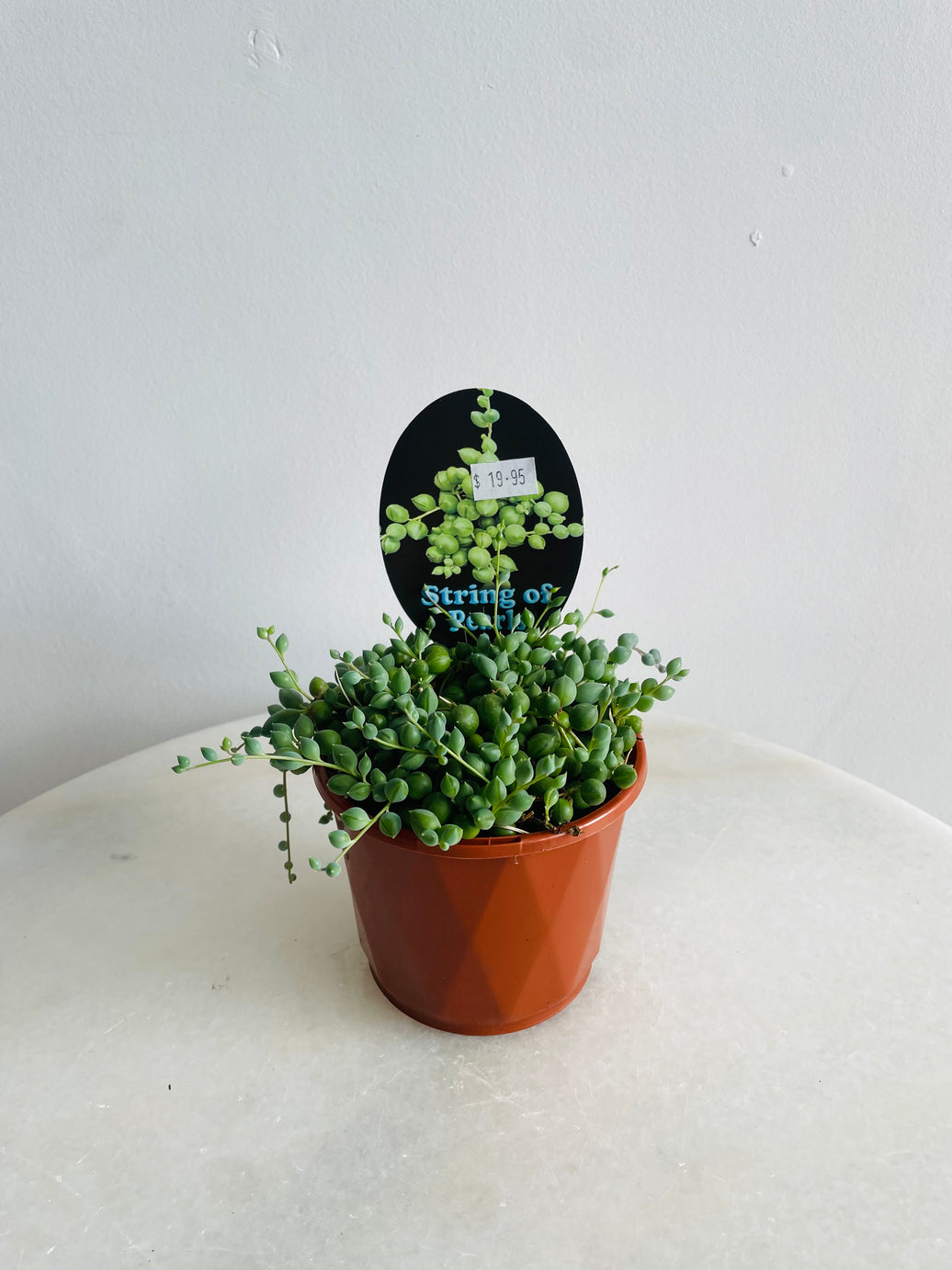
The plant pictured is a lovely, compact specimen with masses of healthy, plump green pearls and fresh trailing growth beginning to spill over the edges of its 100mm nursery pot. It's a fantastic little starting point for growing your own cascading curtain of pearls.
• We photograph as many of our plants as possible; however, some listings may occasionally use supplier images.
• As plants are living things, every plant is unique and natural variations in size, colour and fullness should be expected.
• The plant you receive may not be the exact one pictured, but we'll always hand-pick a beautiful, healthy plant we'd happily display in our own home.