




Silver Sword | Philodendron hastatum | 70mm Nursery Pot
About Silver Sword | Philodendron hastatum | 70mm Nursery Pot
Product Description
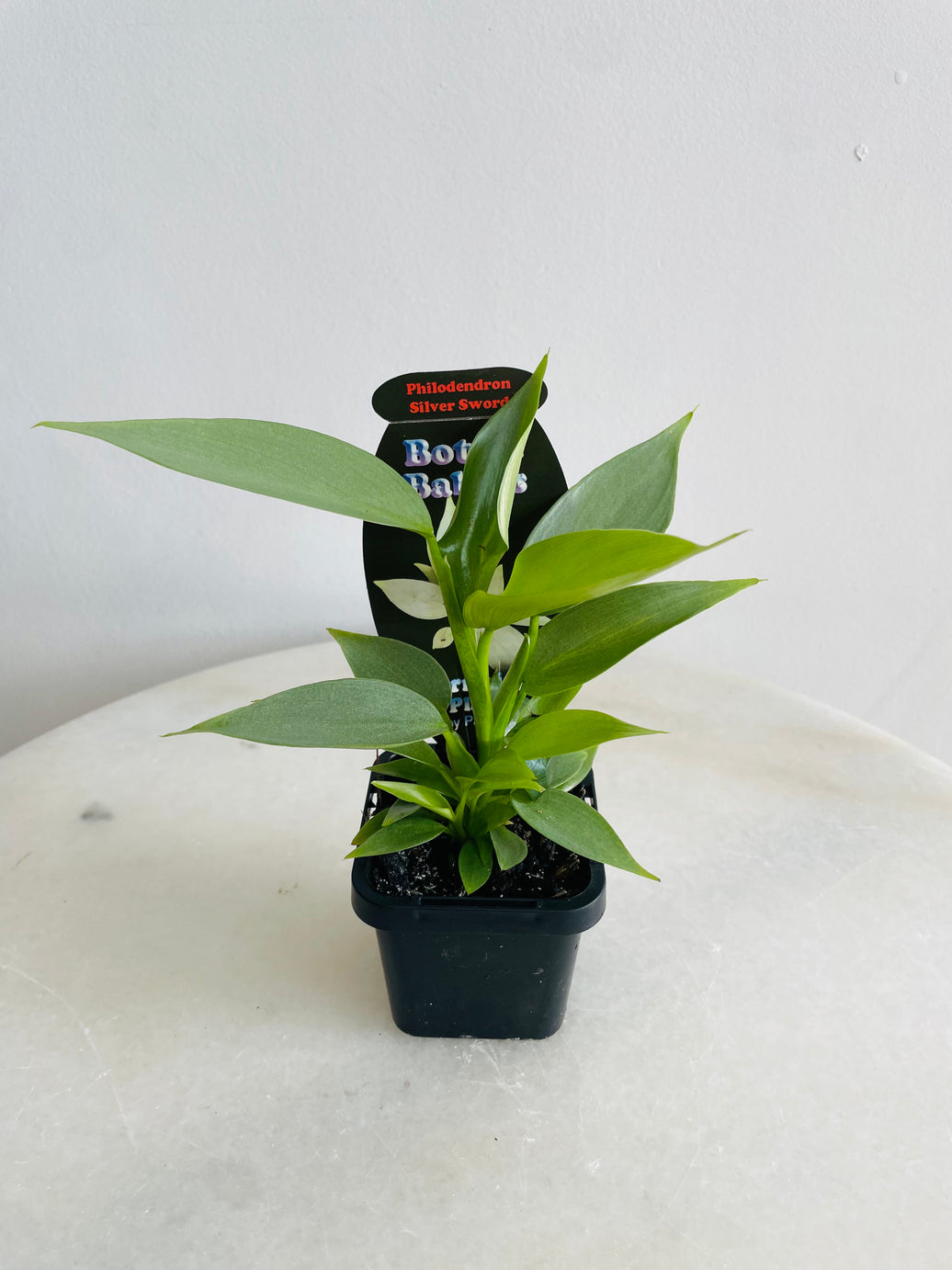
A little silver, a lot of style! The Silver Sword Philodendron is a stunning tropical climber with beautiful metallic foliage that brings something a little different to your indoor jungle.
With its sleek, elongated leaves and gorgeous silvery-blue colouring, this eye-catching Philodendron is all about understated elegance. New leaves emerge in fresh shades of lime green before gradually developing their signature cool, silvery finish. The smooth, slightly shimmering foliage catches the light beautifully, making even a small plant a standout addition to your collection.
Don't let its petite size fool you! Silver Sword is a natural climber that can develop impressive foliage as it matures. Give it a moss pole or climbing support and watch its leaves gradually become larger and more distinctly sword-shaped. Whether you're starting your first Philodendron collection or adding another beauty to an established jungle, this one deserves a spot.
Why You'll Love It
• Beautiful silvery-blue foliage with a subtle metallic sheen.
• Fresh lime-green new growth that creates a lovely contrast against mature leaves.
• Elegant, elongated leaves that become increasingly sword-shaped as the plant matures.
• A natural climber that's perfect for growing up a moss pole or decorative support.
• A rewarding tropical houseplant with plenty of potential to grow into a statement piece.
Plant Care Details
Returns Policy
For our full Returns & Refunds Policy, click here.
Silver Sword | Philodendron hastatum | 70mm Nursery Pot
Silver Sword | Philodendron hastatum | 70mm Nursery Pot

Same-day click and collect.

Signature gift wrapping.

Quick shipping across Australia.

Order before 12pm, Monday to Friday for same-day fulfilment.
While you’re here, explore more!
Picked a favourite already? Dangerous move. There’s a whole lot more to fall for across plants, pots, gifting and homewares.

Plants
Easy-care plants, rare finds, pet-friendly options and everything in between.

Pots
Eye-catching pots, hanging planters, stands and pieces that elevate your greenery.

Plant Health
Tools, accessories and trusted brands to keep your plants thriving.

Homewares
Unique candles, textiles and design-led pieces for your space.

Bath & Body
Soaps, scrubs, oils and self-care essentials. You've earned it.

Gifting
Unforgettable gifts and vouchers to wow your loved ones.

Thanks for shopping small.
You could be shopping at the big green shed. But you're not. Good call! Thanks for backing local and supporting a store with more personality, better chats and a whole lot more care.
The kindest words.


