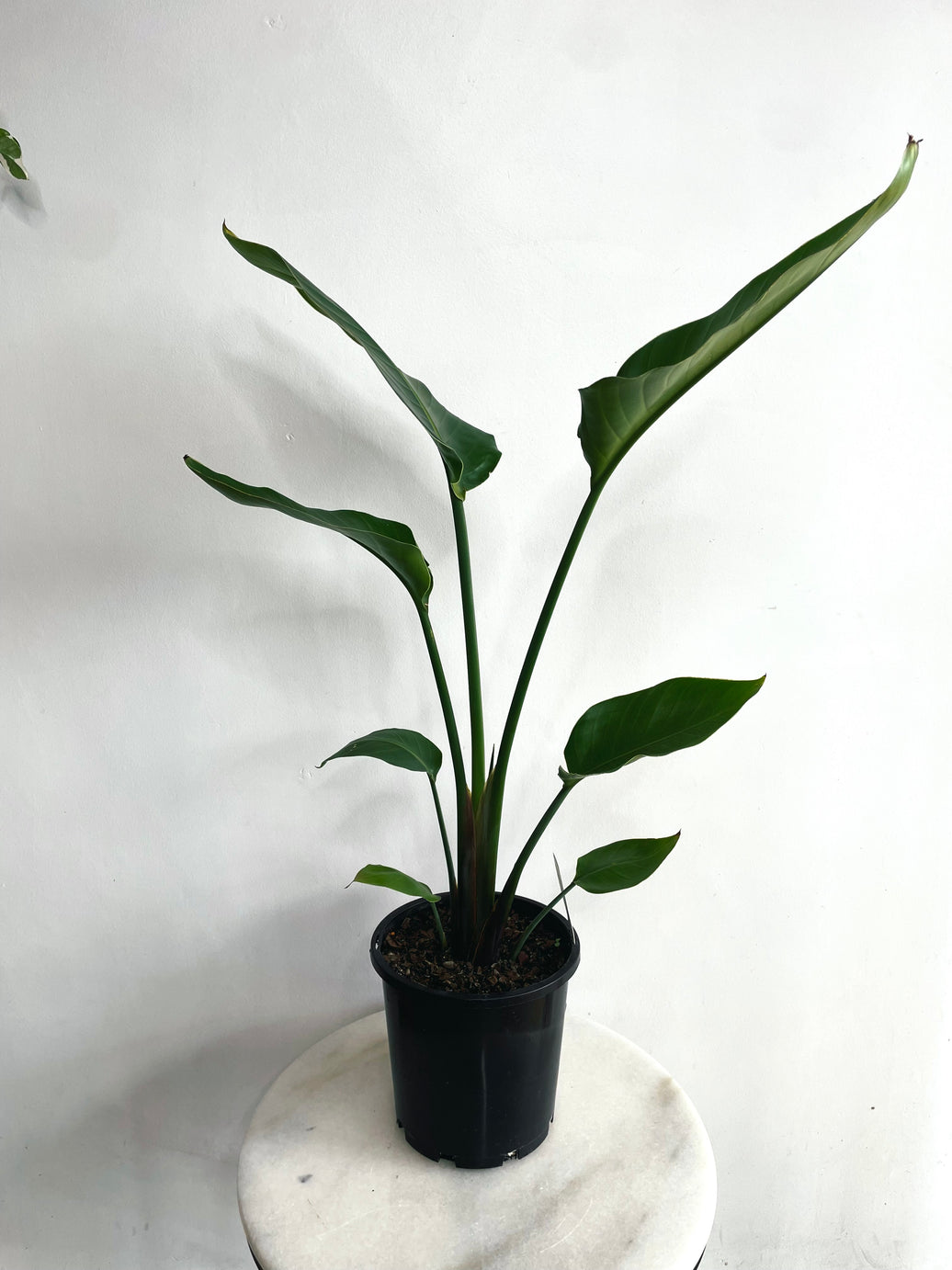
The Details
• Botanical Name: Strelitzia nicolai
• Common Name: Bird of Paradise / Giant White Bird of Paradise
• Pot Size: 200mm Nursery Pot
• Plant Type: Tropical evergreen perennial / Architectural foliage plant
Light
Bird of Paradise absolutely loves natural light! For healthy growth and beautifully developed foliage, position your plant somewhere that receives plenty of bright light throughout the day.
Indoors, a position near a large north-facing or east-facing window is ideal, where it can enjoy bright conditions and several hours of gentle direct sunlight.
Although it can tolerate bright indirect light, this species generally performs best with some direct sunshine. In lower-light environments, growth may slow considerably, new leaves may emerge smaller, and the plant can become stretched as it reaches towards available light.
If your Bird of Paradise has been grown in filtered greenhouse conditions, introduce it to stronger direct sunlight gradually to prevent leaf scorch.
During Melbourne's warmer months, established plants can enjoy a sunny outdoor position, provided they're acclimatised to the conditions and protected from damaging winds.
Watering
Bird of Paradise appreciates regular watering during active growth but prefers its potting mix to partially dry between drinks.
Water thoroughly when the upper few centimetres of soil have dried out, allowing excess water to drain freely from the nursery pot.
During spring and summer, check the potting mix regularly, as larger leaves and warmer temperatures can increase water consumption.
Although this plant enjoys moisture, avoid keeping the roots constantly saturated. Prolonged wet conditions can lead to root rot, particularly in poorly draining potting mixes.
During autumn and winter, reduce watering frequency as temperatures cool and growth naturally slows.
Signs of underwatering can include drooping foliage, dry leaf edges or leaves curling more than usual. Yellowing leaves and consistently wet soil may indicate overwatering.
The key is to maintain a healthy balance between moisture and aeration while allowing the plant to dry slightly between waterings.
Feeding
Bird of Paradise is a relatively vigorous grower under favourable conditions and benefits from regular feeding to support its impressive foliage.
During spring and summer, apply a balanced liquid fertiliser approximately every two to four weeks while the plant is actively producing new growth.
During autumn and winter, reduce feeding to approximately every six to eight weeks if the plant continues growing. If growth has stopped, wait until active growth resumes.
A balanced fertiliser containing nitrogen, phosphorus, potassium and essential trace elements will help support healthy leaves, strong stems and overall plant development.
Avoid applying overly concentrated fertiliser, and always follow the manufacturer's recommended dilution rates.
Growing
Strelitzia nicolai is a large, clump-forming tropical plant known for its upright stems and enormous, banana-like foliage.
New leaves emerge from the centre of the plant as tightly rolled spears, gradually unfurling to reveal their broad, beautifully textured surfaces.
As the plant matures, the leaves become larger and more impressive, while the stems develop additional height and strength.
In its natural habitat, mature plants can reach several metres tall and eventually develop trunk-like stems. Indoors, growth is generally more restricted by available light, ceiling height and container size, although established plants can still become substantial specimens.
For best results, grow your Bird of Paradise in a nutrient-rich, well-draining potting mix that provides adequate moisture retention without becoming waterlogged.
Our Core Indoor Mix is a suitable choice, providing a balanced growing environment to support healthy root development and steady foliage growth.
Bird of Paradise enjoys warmth and generally adapts well to typical indoor humidity levels. However, avoid placing it directly beside heating or cooling vents, as excessively dry air can contribute to crispy leaf edges.
Occasionally wiping the leaves with a soft, damp cloth will help remove dust and keep the foliage looking its best.
As the plant grows, some leaves may naturally develop splits or tears. This is a normal characteristic of Strelitzia foliage and helps the leaves withstand wind in their natural environment.
Mature plants can eventually produce striking white and blue flowers resembling a bird's head, although flowering is uncommon on younger plants and can be difficult to achieve indoors.
Pet Friendly?
No, Bird of Paradise is not considered pet-friendly.
Strelitzia nicolai can cause gastrointestinal irritation if ingested by cats or dogs. Symptoms may include vomiting, nausea and diarrhoea.
Keep this plant out of reach of curious pets and children, and contact your veterinarian if you suspect your pet has eaten any part of it.
Good to Know
Bird of Paradise gets its common name from the extraordinary flowers produced by mature plants, which resemble the head and beak of an exotic bird.
Although this plant is often grown for its impressive foliage, established outdoor specimens can eventually produce beautiful white and blue flowers.
Unlike the smaller Orange Bird of Paradise (Strelitzia reginae), Strelitzia nicolai develops much larger foliage and can become a substantial, tree-like plant as it matures.
It's completely normal for the leaves to develop natural splits or tears over time. These are part of the plant's growth characteristics and don't necessarily indicate poor health.
New leaves emerge tightly rolled before gradually opening, so avoid trying to manually unfurl them, as this can damage the delicate new growth.
Bird of Paradise is happiest when given plenty of bright light and sufficient space to spread its impressive foliage.
• We photograph as many of our plants as possible; however, some listings may occasionally use supplier images.
• As plants are living things, every plant is unique and natural variations in size, colour and fullness should be expected.
• The plant you receive may not be the exact one pictured, but we'll always hand-pick a beautiful, healthy plant we'd happily display in our own home.