The Details
• Botanical Name: Trichocereus pasacana (syn. Echinopsis atacamensis subsp. pasacana)
• Common Name: Cardón Cactus
• Pot Size: 70mm Nursery Pot
• Plant Type: Columnar desert cactus
Light
The Cardón Cactus loves sunshine and thrives in bright, open conditions with plenty of direct light.
Indoors, position it near a sunny north-facing window where it can receive several hours of direct sunlight each day. A bright west-facing position may also work well, provided the plant is gradually acclimatised to stronger afternoon sun.
Outdoors, choose a sunny location with excellent airflow and protection from prolonged wet weather.
Although this species naturally grows in exposed environments, young plants and those previously kept in greenhouse conditions should be introduced to intense sunlight gradually to prevent scorching.
Strong, consistent light is essential for maintaining compact growth, sturdy stems and well-developed spines. Insufficient light can cause stretched, weakened or uneven growth.
Watering
The Cardón Cactus is naturally adapted to dry environments and prefers a thorough watering followed by an extended drying period.
During spring and summer, water deeply once the potting mix has dried out completely. Allow excess water to drain freely and avoid watering again while moisture remains around the roots.
In warm, bright conditions, the plant may require more frequent watering than during cooler or overcast periods. Always assess the growing medium rather than following a fixed schedule.
As temperatures cool in autumn, gradually reduce watering to accommodate slower growth.
During winter, keep the potting mix predominantly dry, particularly if the plant is experiencing cooler temperatures. In a warm indoor environment, occasional light watering may be appropriate if the plant shows signs of dehydration.
Avoid allowing the pot to sit in standing water. Prolonged moisture, particularly during cooler weather, can cause root and stem rot.
Feeding
Feed your Cardón Cactus throughout the year according to its growth rate and seasonal conditions.
During spring and summer, apply a diluted cactus and succulent fertiliser approximately every four to six weeks to support healthy stem development and strong growth.
As temperatures begin to cool and growth slows, reduce feeding frequency.
During a cool winter rest, fertilising is generally unnecessary. Resume feeding when warmer temperatures encourage active growth.
A balanced or low-nitrogen fertiliser formulated for cacti and succulents is ideal. Avoid excessive feeding, as this can encourage soft, weak growth that is less resistant to environmental stress.
Growing
Trichocereus pasacana is a slow-growing, columnar cactus native to the high-altitude regions of South America, particularly Argentina and Bolivia.
In its natural habitat, mature specimens can develop into enormous, tree-like cacti, sometimes reaching several metres in height and producing branching stems. However, this impressive growth takes many years, especially when grown in containers.
Young plants typically begin with a rounded or short-columnar shape, gradually becoming taller and more defined as they mature.
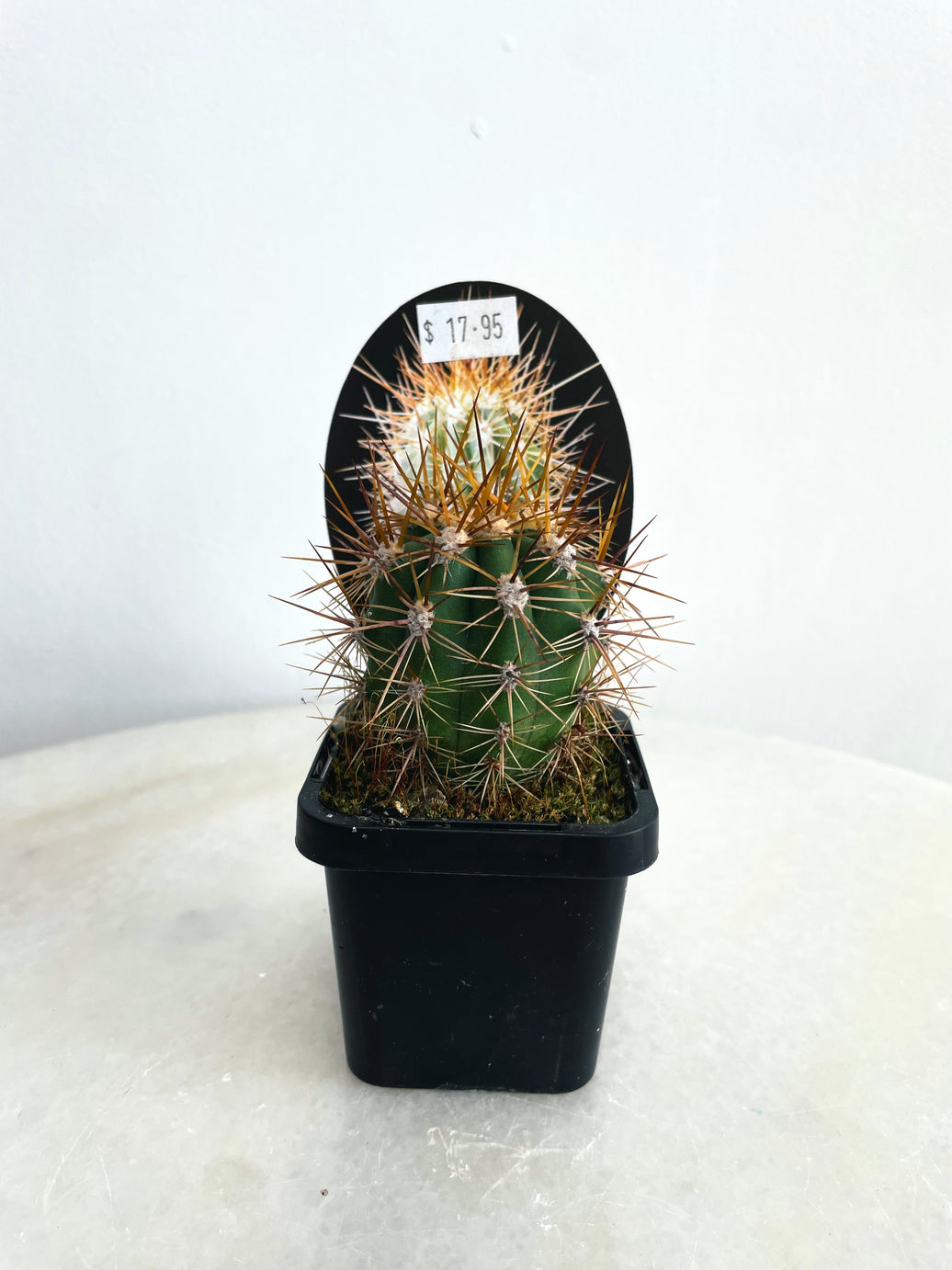
The thick green stems feature prominent vertical ribs lined with woolly areoles. From these areoles emerge clusters of strong, often lengthy spines that range from golden yellow to reddish-brown.
As the plant develops, its spination becomes increasingly impressive, giving mature specimens a wonderfully rugged, sculptural appearance.
For best results, grow your Cardón Cactus in a coarse, mineral-rich potting medium with excellent drainage and aeration.
Our Cacti & Succulent Mix is a suitable choice, providing the structure and drainage required to support healthy root development while reducing the risk of excess moisture.
Choose a container with drainage holes and avoid moving the plant into an unnecessarily large pot. A slightly snug container allows the growing medium to dry more consistently between waterings.
The Cardón Cactus appreciates warm temperatures during its growing season and can tolerate cooler conditions when kept dry. Although established plants may withstand brief light frosts, young container-grown specimens should be protected from freezing temperatures and prolonged winter rain.
In Melbourne, a sunny, sheltered outdoor position can work well during warmer months. During winter, protect the plant from excessive rainfall and persistent dampness.
With maturity and suitable conditions, this species may produce large, pale flowers, although flowering is unlikely while the plant is young and may take many years to occur.
Pet Friendly?
The Cardón Cactus is not generally regarded as chemically toxic to cats or dogs.
However, it is not considered pet-friendly due to its long, sharp spines, which can cause puncture wounds or injuries if touched, chewed or swallowed.
The prominent spines are particularly strong and should be treated with care.
Keep this cactus out of reach of curious pets and young children, and always use protective gloves when handling or repotting.
Good to Know
The Cardón Cactus is sometimes referred to as the Argentine Saguaro because of its impressive mature appearance, although it is a different species from the true Saguaro cactus.
Its botanical name is commonly listed as Trichocereus pasacana, while some botanical classifications place it within Echinopsis as Echinopsis atacamensis subsp. pasacana.
The dramatic golden-brown spines are one of its most distinctive features. Their length, colour and density can vary depending on the plant's age, genetics and growing conditions.
Although your Cardón Cactus will arrive as a compact young plant, it has the potential to develop into a substantial columnar specimen over many years.
Growth is generally slow, particularly in smaller containers, making it suitable for collectors who enjoy watching their plants gradually develop.
When repotting, use thick protective gloves or folded newspaper to avoid injury from the long, rigid spines.
Avoid placing this cactus in narrow walkways or areas where people and pets may accidentally brush against it.
• We photograph as many of our plants as possible; however, some listings may occasionally use supplier images.
• As plants are living things, every plant is unique and natural variations in size, colour and fullness should be expected.
• The plant you receive may not be the exact one pictured, but we'll always hand-pick a beautiful, healthy plant we'd happily display in our own home.