




Golden Columnar Cactus | Weberbauerocereus johnsonii | 70mm Nursery Pot
About Golden Columnar Cactus | Weberbauerocereus johnsonii | 70mm Nursery Pot
Product Description
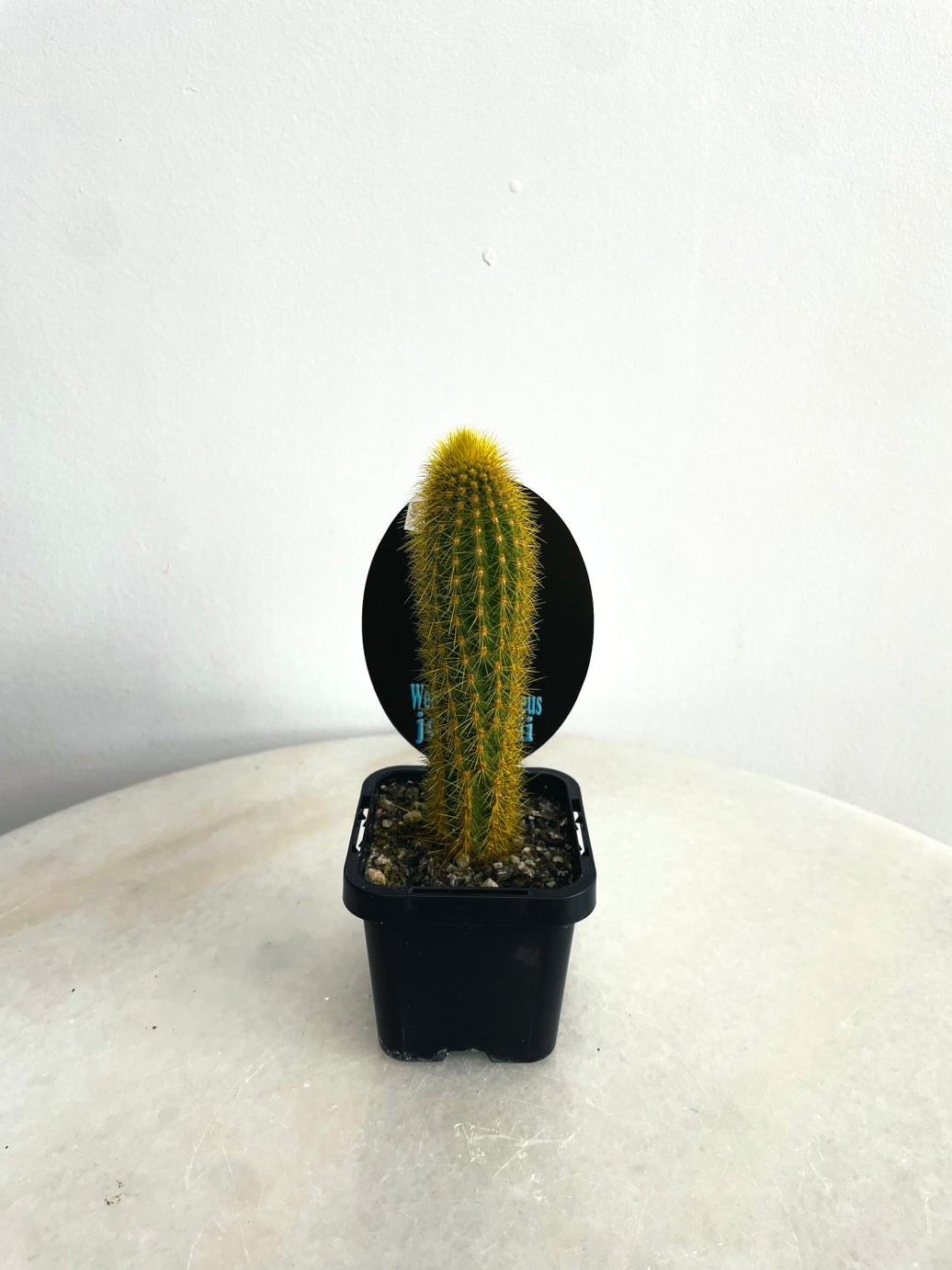
A little golden sunshine with a seriously spiky personality! Meet the Golden Columnar Cactus, a striking desert beauty that brings incredible colour, texture and architectural charm to any plant collection.
Botanically known as Weberbauerocereus johnsonii, this eye-catching cactus features an upright, column-shaped body covered in dense, golden-yellow spines. Beneath that glowing exterior sits a beautifully ribbed green stem, creating a wonderful contrast between the cactus's vibrant spines and its rich green body.
Native to the arid landscapes of Peru, this fascinating species is built to handle sunny conditions and periods of drought. Its naturally upright growth habit makes it particularly appealing for anyone who loves sculptural plants with a little height.
While young plants are wonderfully compact, the Golden Columnar Cactus can develop into an impressive upright specimen over time. It's a fantastic choice for sunny windowsills, cactus collections and decorative displays where its golden colouring can really shine.
And the best part? With plenty of sunlight, excellent drainage and careful watering, this distinctive cactus is relatively straightforward to care for.
Why You'll Love It
• Brilliant golden-yellow spines create a beautiful sun-kissed appearance.
• Upright, columnar growth adds height and architectural interest.
• Deep green, ribbed stems provide a striking contrast to the golden spines.
• Naturally drought-tolerant and well suited to sunny positions.
• A distinctive addition to cactus collections and desert-inspired displays.
Plant Care Details
Returns Policy
For our full Returns & Refunds Policy, click here.
Golden Columnar Cactus | Weberbauerocereus johnsonii | 70mm Nursery Pot
Golden Columnar Cactus | Weberbauerocereus johnsonii | 70mm Nursery Pot

Same-day click and collect.

Signature gift wrapping.

Quick shipping across Australia.

Order before 12pm, Monday to Friday for same-day fulfilment.
While you’re here, explore more!
Picked a favourite already? Dangerous move. There’s a whole lot more to fall for across plants, pots, gifting and homewares.

Plants
Easy-care plants, rare finds, pet-friendly options and everything in between.

Pots
Eye-catching pots, hanging planters, stands and pieces that elevate your greenery.

Plant Health
Tools, accessories and trusted brands to keep your plants thriving.

Homewares
Unique candles, textiles and design-led pieces for your space.

Bath & Body
Soaps, scrubs, oils and self-care essentials. You've earned it.

Gifting
Unforgettable gifts and vouchers to wow your loved ones.

Thanks for shopping small.
You could be shopping at the big green shed. But you're not. Good call! Thanks for backing local and supporting a store with more personality, better chats and a whole lot more care.
The kindest words.


